Your Taylor, TX Roof Has Probably Been Hit Before: What Repeat Hail Damage Means for Your Insurance Claim
If your roof in Taylor is more than about five years old, there's a good chance it's already been through a hail event — whether or not you ever filed a claim for it. Taylor sits on the eastern edge of Williamson County, in the direct path of storms that regularly track northeast out of the Hill Country, and the city has taken real hits more than once in the last decade.
That history is exactly what makes the next claim harder than most homeowners expect. Insurance adjusters don't evaluate your roof in a vacuum — they look for evidence of prior damage, and in a market like Taylor's, they usually find it. This guide covers what repeat hail exposure actually means for a claim, how "which storm caused this" disputes play out, and what to do if a carrier tries to use your roof's history against you.
Taylor's Recent Hail Timeline
Our own hail damage guide for Taylor TX already references the two events most Taylor homeowners remember: 2016 and 2021, both of which caused widespread roof damage and repair calls across neighborhoods including Downtown Taylor, Taylor Ranch, and Mustang Creek.
There's a third event worth adding to that list. In May 2024, a Thursday storm system brought large hail through Central Texas, and FOX 7 Austin reported specific damage to roofs and home siding in Taylor. If your roof hasn't been inspected since before that storm, it's worth finding out whether it left damage you never knew about — granule loss and mat bruising from a hail event don't always announce themselves the way a cracked window or a dented gutter does.
Three known events in roughly eight years is not a coincidence of geography — it's the pattern in this specific part of Williamson County. If you've owned your home through any stretch of that window, the honest starting assumption is that your roof has taken more than one hit, whether or not a claim was ever filed.
Why Multiple Storms Complicate a Single Claim
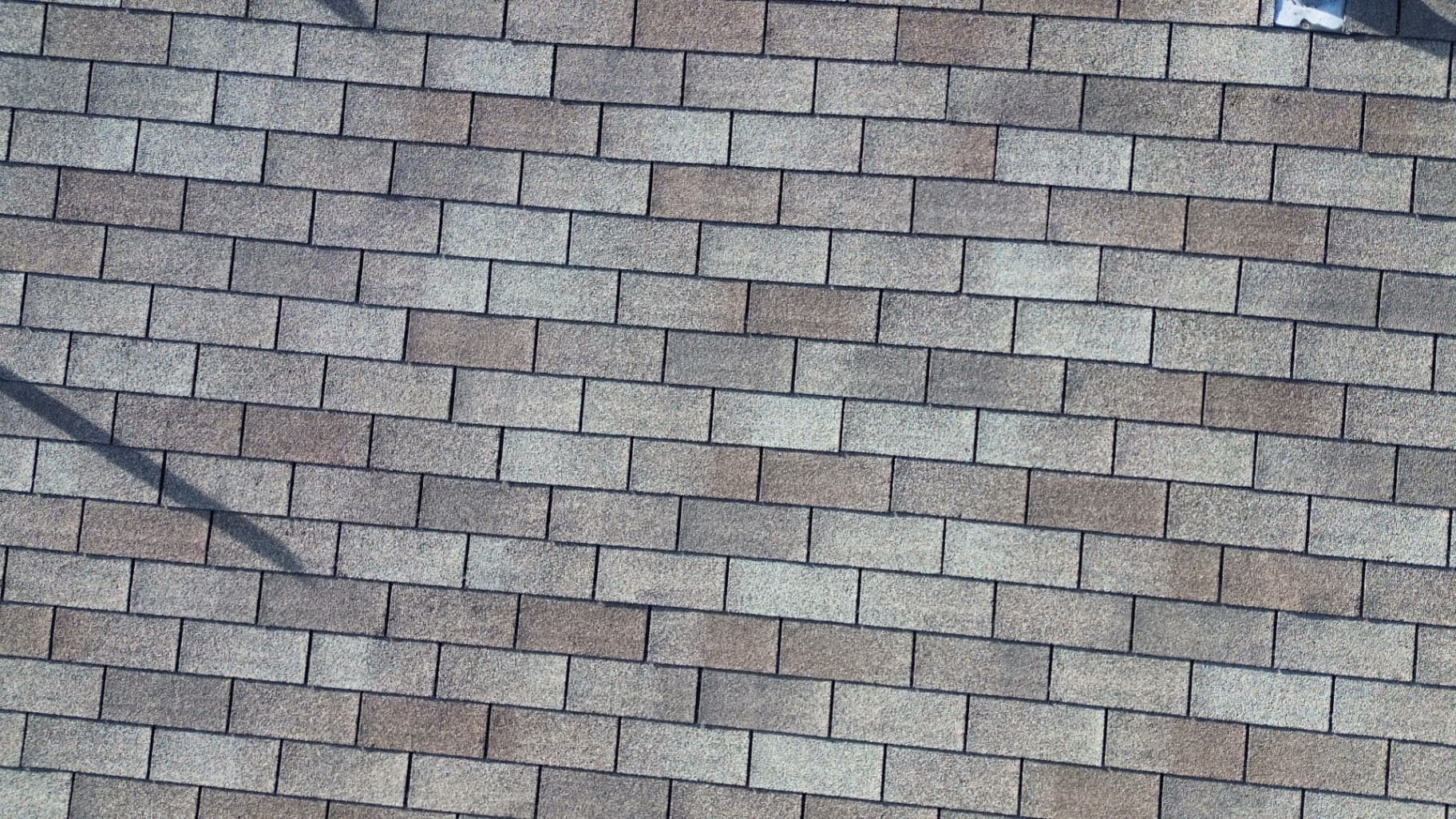
Here's the mechanism that catches homeowners off guard. When an adjuster inspects your roof after a new storm, they're not just looking for damage — they're looking for the age of the damage. Fresh hail impact sites look different from weathered ones: granule loss at a new impact site exposes bright, unoxidized asphalt, while an older impact site has had months or years of UV exposure to darken and weather the exposed area.
If your roof shows a mix of fresh and old impact sites — which is common on a roof that's been through 2016, 2021, and 2024 without ever being professionally inspected — an adjuster has an opening to argue that some or most of the damage predates the current claim. That's not necessarily bad faith on the adjuster's part. It's a legitimate technical question. But it's a question that goes a lot better for you when a contractor has already documented and dated the damage pattern than when the adjuster is the only one forming an opinion on the roof.
This is also where pre-existing damage exclusions come into play. Most Texas homeowners policies exclude damage that existed before the policy's current term, or before a specific storm event being claimed. An adjuster who can plausibly attribute damage to an earlier, already-settled (or never-filed) event has a basis to reduce or deny the current claim on those grounds.
The Compounding Damage Problem
Hail damage is cumulative in a way that isn't obvious from the ground. Each impact compresses the granule layer into the shingle's asphalt mat, and each event's worth of granule loss shortens the shingle's remaining service life — even where there's no visible crack or hole. A roof that's absorbed three hail events over eight years without any of them being addressed isn't "as good as new between storms." It's carrying accumulated wear that makes it more vulnerable to the next event, and it makes proving what caused what significantly harder after the fact.
This is precisely why a contractor's documentation matters more on a repeat-exposure roof than on one that's only ever seen a single event. A thorough inspection differentiates:
- Fresh impact sites — sharp-edged granule displacement, bright exposed mat, debris or granules still loose in the gutters and on the ground below
- Weathered impact sites — soft-edged, oxidized, granules resettled or washed away entirely, no loose debris remaining
- Cumulative field wear — overall granule thinning across the whole roof that isn't tied to any single identifiable impact pattern
A written, photo-documented report that separates these categories is the single best tool for making the case that this claim covers this storm's damage — not a rehash of something from 2021 that was never addressed.
What If You Never Filed for 2016, 2021, or a Storm In Between?
Texas gives homeowners a one-year window from the date of a storm to file a claim for hail or wind damage. If you didn't file within a year of the 2016, 2021, or 2024 events, those specific claims are almost certainly no longer available to you — that window doesn't reopen.
That doesn't mean the damage from those storms is irrelevant now. Two things are both true at once:
- You likely can't file a new claim citing a 2021 storm as the cause, three-plus years after the fact.
- The cumulative wear from that event is still sitting on your roof, and it still affects how much damage a current qualifying storm needs to cause before your roof crosses into claim territory.
In practice, this means a roof with unaddressed history from earlier events often needs less "new" damage to justify a full replacement recommendation — because it's starting from a more depleted baseline. A good contractor will explain this distinction clearly rather than either overselling ("we can get your 2021 damage covered now," which usually isn't accurate) or ignoring it entirely.
If Your Current Claim Gets Denied or Reduced Because of "Prior Damage"
This is the scenario repeat-exposure homeowners run into most often. Here's how to respond:
Get the specific policy language. A denial or reduced payout citing "pre-existing damage" should come with a reference to the exact policy provision being applied. Don't accept a verbal explanation — request it in writing.
Get an independent inspection before you accept the adjuster's characterization. A second set of eyes — ideally from a contractor who inspects roofs for a living rather than adjusts claims for a living — can document whether the damage pattern actually supports "mostly old" or whether it's being mischaracterized. This is the same reason we recommend getting a contractor inspection before the adjuster walkthrough on any hail claim, covered in more depth in our Taylor TX hail damage guide.
Request a reinspection, and know your appraisal rights. If the adjuster's scope still seems too low after a documented second opinion, most Texas homeowners policies include an appraisal clause — a process that brings in a neutral third-party appraiser to resolve exactly this kind of dispute. Our Texas roof insurance claim guide covers the appraisal and supplement process in detail.
File a complaint with the Texas Department of Insurance if you believe the denial is improper. This is a real, available option, and it's worth using if you've gone through the steps above and still believe your claim was handled unfairly.
Building Your Roof's Paper Trail Before the Next Storm
If you've read this far and realized you honestly don't know whether your roof has undocumented damage from a past event, the most useful thing you can do isn't waiting for the next storm — it's getting a baseline inspection now.
A free inspection today, with a dated, written photo report, does two things for you:
- It tells you now whether you're sitting on damage from 2016, 2021, or 2024 that's worth addressing before it gets worse.
- It gives you a documented "before" picture. If a new storm hits next spring, having a recent, dated baseline makes it dramatically easier to prove what damage is new — which is the entire crux of every dispute described above.
This is a five-minute conversation now that can save weeks of back-and-forth with an adjuster later.
Frequently Asked Questions
My roof already has old hail damage. Can I still file a claim for a new storm?
Yes — a new qualifying storm event supports a new claim regardless of your roof's history. The complication isn't whether you can file; it's making sure the damage attributed to the new claim is actually distinguishable from older, unaddressed damage. That's what proper documentation is for.
Does filing multiple hail claims over the years hurt me?
Filing a legitimate, storm-caused claim is generally treated as a no-fault event, but carriers do factor claim history into renewal pricing and underwriting decisions over time. That said, letting real damage go unaddressed to avoid filing a claim usually costs more in the long run through accelerated deterioration and larger eventual repairs.
What if I genuinely don't know which storm caused the damage on my roof?
This is common, and it's not disqualifying. A contractor inspection can often distinguish relative age (fresh vs. weathered) even without pinpointing an exact date, and cross-referencing against the National Weather Service storm database for Taylor, TX can help narrow down which documented event lines up with your home specifically.
How do I find out if a specific storm actually hit my address in Taylor?
The National Weather Service storm events database and local news archives (including coverage like FOX 7 Austin's reporting on the May 2024 event) are good starting points. A contractor familiar with Taylor's storm history can also help cross-reference your neighborhood against known event paths.
Can damage from two different storms be included on the same claim?
Generally, no — each claim is tied to a specific date of loss. This is exactly why separating old and new damage matters so much: it determines which damage belongs on which claim, or whether some of it isn't claimable at all because its filing window has closed.
Free Hail Damage Inspection and Documentation in Taylor TX
Ripple Roofing is a CertainTeed ShingleMaster Premier-certified roofing contractor serving Taylor, Texas and all of Williamson County. Whether you're dealing with a fresh storm, trying to sort out a denied claim, or just want a documented baseline before the next hail season, we provide free inspections with written, photo-dated reports that hold up in an insurance conversation.
We serve all Taylor neighborhoods: Downtown Taylor, Taylor Ranch, Mustang Creek, Heritage Oaks, Donahoe Creek Estates, North Taylor, East Taylor, and the Murphy Street District.
Schedule your free hail damage inspection in Taylor TX or call (512) 763-5277. We're based in Round Rock, 15 minutes from Taylor, with 24/7 availability for storm emergencies.