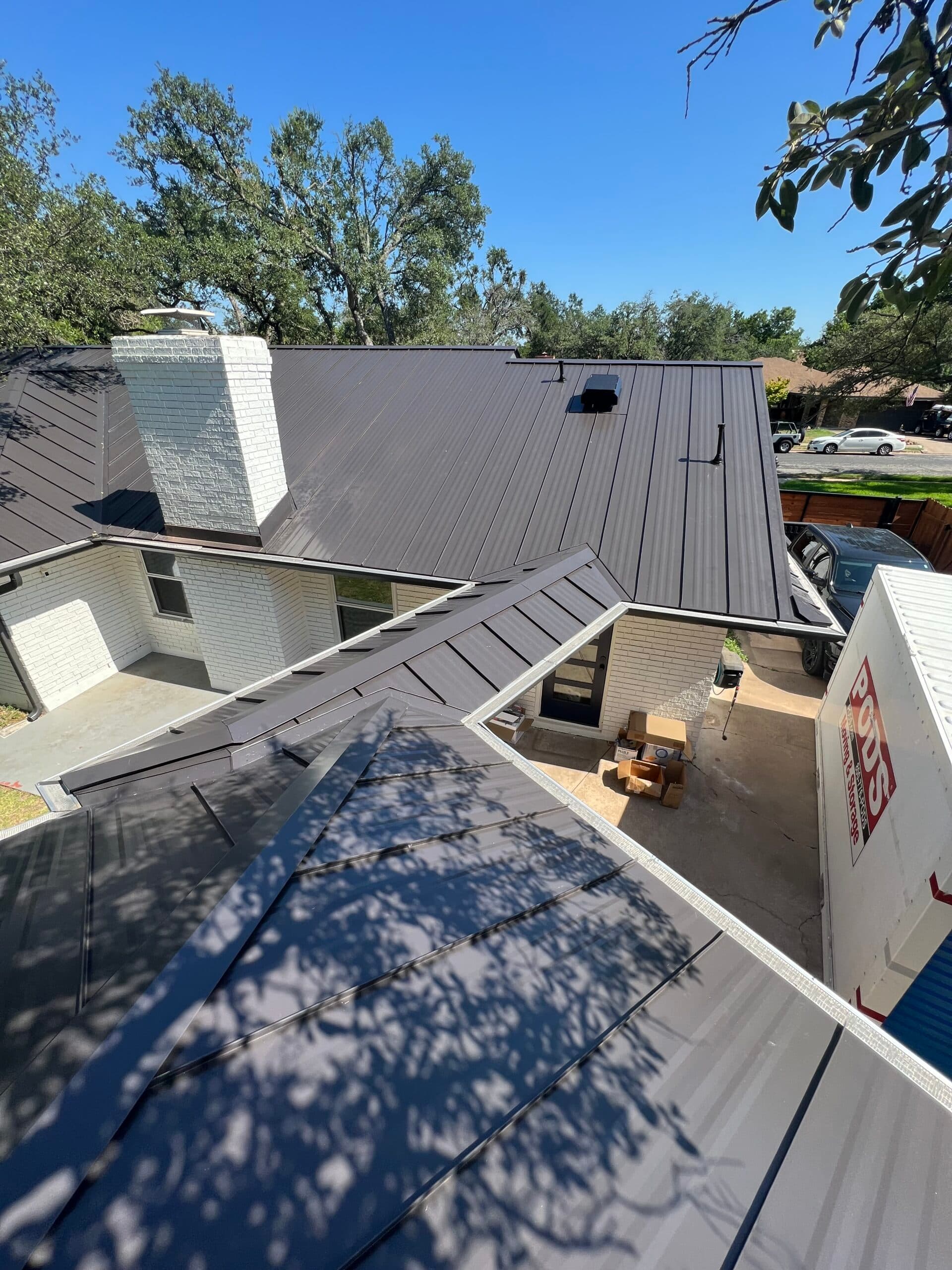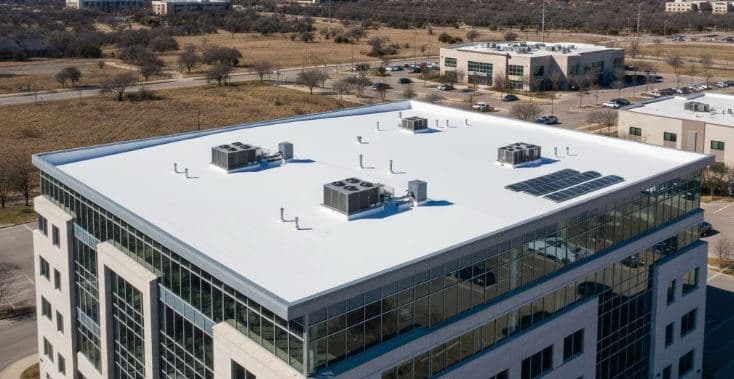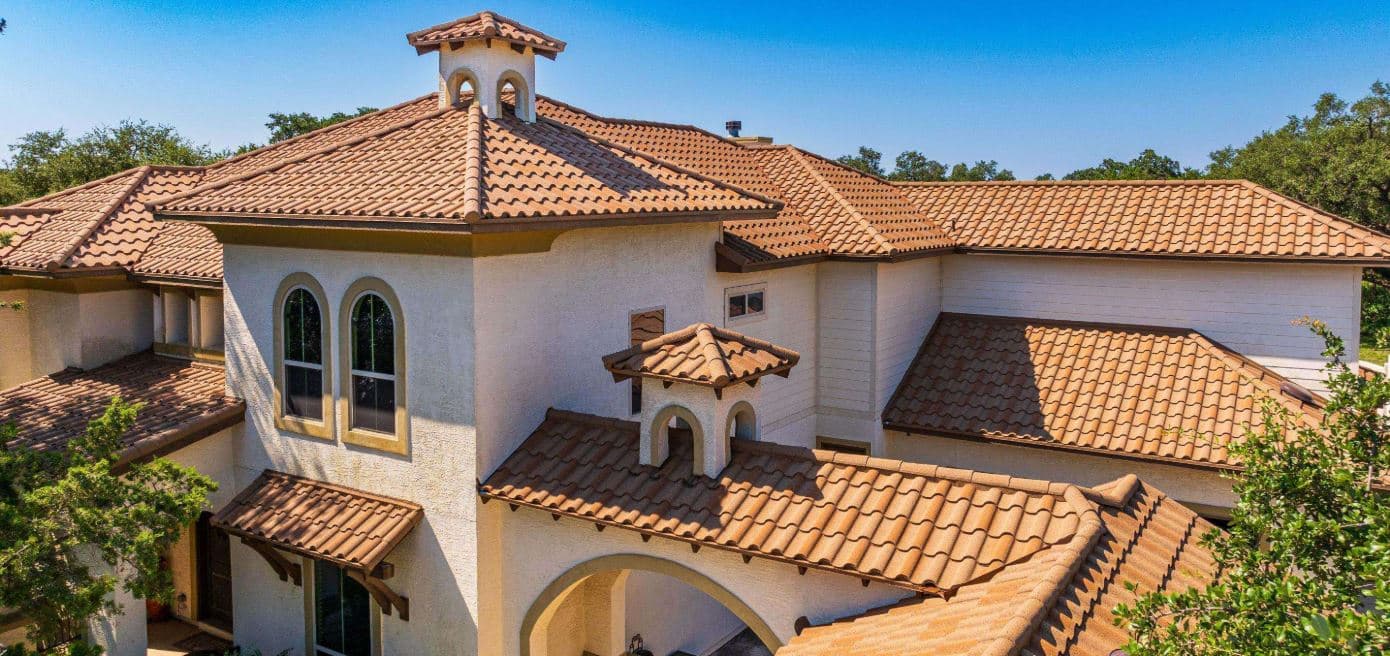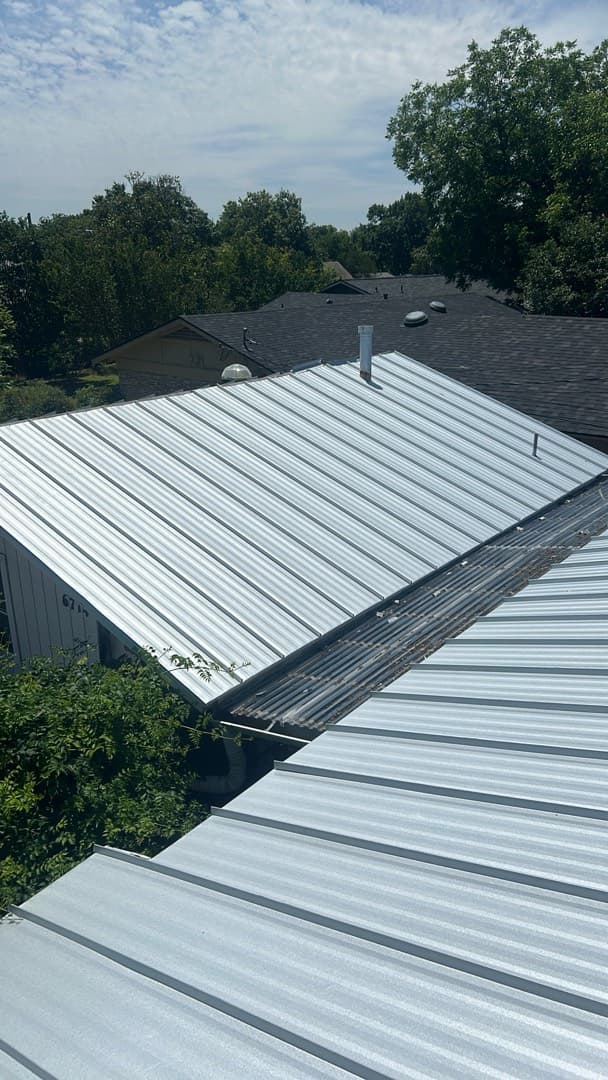
Standing seam metal roofing has been the dominant commercial roofing system in Texas for decades — and the reasons are straightforward. Texas commercial buildings face brutal heat loads, hailstorms, and wind events that demand a system engineered to perform for 40-60 years with minimal maintenance. Standing seam delivers that.
Whether you own a warehouse in Round Rock, a retail strip center in Austin, a light industrial building in Georgetown, or an office building anywhere in Central Texas, this guide covers what standing seam means for commercial applications: costs, specifications, energy performance, and what to look for in a contractor.
Why Standing Seam Dominates Commercial Roofing in Texas
Commercial roofing systems are evaluated differently than residential. A building owner or property manager isn't just asking "will this look nice?" — they're asking:
- What's the lowest total cost of ownership over 20-40 years?
- What's the energy penalty from a hot roof in Texas summer?
- What's the liability if the roof fails and damages inventory, equipment, or operations?
- What does maintenance cost annually?
Standing seam wins on all four:
Total cost of ownership: A Duro-Last TPO membrane or built-up roof on a commercial building typically requires major maintenance every 10-15 years and full replacement at 20-30 years. Standing seam installed correctly runs 40-60 years with essentially no maintenance beyond annual gutter clearing. The replacement cycles saved over a 40-year building life more than offset the higher installation cost.
Energy: Commercial buildings have large, flat or low-slope roof surfaces exposed to Texas summer sun for 8+ hours/day. A standing seam roof with a cool-roof reflective coating (SRI 29+) reduces rooftop temperatures by 50-80°F versus dark TPO or built-up roofing. For a 10,000 sq ft building, that can translate to $3,000-$8,000/year in cooling savings.
Reliability: Standing seam's concealed fastener system has no exposed screws to back out, no seam tape to delaminate, and no pitch pans to dry out and crack. Roof failures on commercial buildings — the kind that ruin inventory or shut down operations — are extremely rare with properly installed standing seam.
Maintenance: Annual inspection and gutter clearing. That's essentially it for a well-installed standing seam commercial roof.
Commercial Standing Seam: Specifications
Commercial applications have different requirements than residential standing seam. The key differences:
Low-Slope Capability
Most commercial buildings have low-slope roofs (1:12 to 3:12 pitch). Residential snap-lock standing seam is not appropriate for slopes below 3:12.
For low-slope commercial (1:12 to 3:12):
- Mechanically seamed panels required — a seaming machine rolls and crimps panels to 360° for maximum watertightness
- Minimum 2" seam height (3" preferred for very low slopes)
- Sealed or soldered end laps at panel transitions
- Heavier gauge recommended (22 or 24 gauge vs. 26 gauge for residential)
For moderate commercial slopes (3:12 and above):
- Snap-lock panels may be acceptable
- 1.5"–2" seam height typical
- Standard floating clip system
Panel Materials for Commercial Applications
- Galvalume steel (most common): Excellent corrosion resistance, cost-effective, accepts cool-roof PVDF coatings. Typical commercial choice for warehouses, industrial, retail.
- Aluminum: Better for coastal or high-humidity environments (Houston area), lighter weight. More expensive.
- Steel with hot-dip galvanized coating: Older specification, still found on some projects. Galvalume has largely replaced it.
Gauge Selection
- 24 gauge: Standard for most commercial applications. Good balance of strength, weight, and cost.
- 22 gauge: Specified for high-load areas (areas with heavy foot traffic for HVAC maintenance), large spanning applications, or high-wind zones. Costs more.
- 26 gauge: Sometimes used for light commercial, but 24 is preferred for most Texas commercial applications.
Commercial Standing Seam Costs in Texas (2026)
Commercial standing seam pricing is quoted per roofing square (100 sq ft) rather than per square foot.
Installed Cost by Building Type
| Building Type | Typical Slope | Cost Range/Sq Ft | Example: 10,000 sq ft |
|---|---|---|---|
| Warehouse / Industrial | Low (1:12–2:12) | $12–$18 | $120,000–$180,000 |
| Retail / Strip Center | Low to moderate | $13–$19 | $130,000–$190,000 |
| Office Building | Moderate (3:12–5:12) | $14–$20 | $140,000–$200,000 |
| Church / Assembly | Moderate to steep | $15–$22 | $150,000–$220,000 |
| Agricultural / Barn | Low to moderate | $10–$16 | $100,000–$160,000 |
These prices include: tear-off of existing roofing, deck inspection and repair, commercial-grade underlayment, mechanically seamed standing seam panels, all trim and flashing, gutters and downspouts (if applicable), labor, permits, and cleanup.
Factors that add cost:
- HVAC curbs and rooftop equipment: Each unit requires a custom metal curb and flashing — add $800–$2,500 per unit
- Skylights: Curb or deck-mount flashing — $1,500–$4,000 each
- Parapets: Capping and flashing adds complexity
- Multiple roof levels or transitions between slopes
- Existing roofing with multiple layers (additional tear-off cost)
Comparison: Standing Seam vs. Other Commercial Systems (10,000 sq ft)
| System | Installed Cost | Lifespan | Maintenance | 40-Year Total |
|---|---|---|---|---|
| Standing Seam Metal | $130,000–$180,000 | 40-60 years | Minimal | $130,000–$180,000 |
| TPO Membrane | $70,000–$100,000 | 20-30 years | Moderate | $140,000–$200,000 |
| EPDM Rubber | $65,000–$95,000 | 20-30 years | Moderate | $130,000–$190,000 |
| Built-Up (BUR) | $80,000–$120,000 | 15-25 years | High | $160,000–$240,000 |
| Modified Bitumen | $75,000–$110,000 | 20-30 years | Moderate | $150,000–$220,000 |
40-year total includes 1-2 replacement cycles for membrane systems plus estimated maintenance costs.
Standing seam is the highest upfront cost and the lowest total cost over a 40-year building life in most scenarios.
Energy Performance for Texas Commercial Buildings
Texas commercial buildings face a unique challenge: roof surface temperatures of 150-180°F during summer peak hours on dark membrane or built-up roofing. That heat radiates directly into the building's HVAC zone, driving up cooling loads and energy bills.
Standing seam cool-roof performance:
- Reflective PVDF-coated panels with SRI (Solar Reflectance Index) of 29-60+
- Emittance ratings of 0.8-0.9 (re-radiates heat away from building)
- Surface temperatures 50-80°F lower than dark membranes
- Qualifies for Energy Star certification with appropriate coatings
Estimated annual energy savings vs. dark membrane (Central Texas):
| Building Size | Cooling Savings | Annual $ (at $0.12/kWh) |
|---|---|---|
| 5,000 sq ft | 15,000–30,000 kWh | $1,800–$3,600 |
| 10,000 sq ft | 30,000–60,000 kWh | $3,600–$7,200 |
| 20,000 sq ft | 60,000–120,000 kWh | $7,200–$14,400 |
| 50,000 sq ft | 150,000–300,000 kWh | $18,000–$36,000 |
For larger buildings, energy savings alone can recoup the standing seam premium within 10-15 years.
Additional financial incentives:
- Federal Energy-Efficient Commercial Building Deduction (Section 179D): Energy-efficient roofing improvements may qualify for tax deductions for commercial building owners.
- Utility rebates: Austin Energy and other Texas utilities have offered rebates for Energy Star-qualified cool-roof materials. Verify current programs with your utility.
- Insurance: Commercial property insurers in Texas recognize Class 4 impact-rated metal roofing. Premium reductions vary by carrier and building class.
Solar Panels on Commercial Standing Seam
Standing seam is the preferred base system for commercial solar in Texas. The reasons are the same as residential but amplified:
- Clamp attachment: Solar racking clamps to the raised seam ribs without penetrating the roof. For a 100,000-watt commercial solar array, that means thousands of potential penetration points eliminated.
- Warranty preservation: Most standing seam manufacturers specifically allow clamp-based solar attachment without voiding the roof warranty.
- Long service life alignment: A 40-year standing seam roof and a 25-30 year solar system are well-matched — you don't replace the roof before the solar system pays back.
- Reduced installation cost: Clamp systems are faster to install than penetrating racking, lowering the solar installation cost.
If commercial solar is a consideration for your building — now or in the future — specify standing seam from the start.
Common Commercial Standing Seam Projects in Central Texas
Warehouses and light industrial (Round Rock, Cedar Park, Georgetown): The I-35 corridor from Georgetown to Kyle has seen significant industrial development. Standing seam is specified on the majority of new warehouses because building owners and their lenders have learned what happens to TPO roofs on poorly-ventilated Texas warehouses over 20 years.
Retail and office buildings: Standing seam adds a premium commercial aesthetic that distinguishes a property and signals quality to tenants. In the Austin metro, it's increasingly common on retail centers wanting to differentiate from commodity construction.
Churches and assembly buildings: Large span roofs with complex shapes are common in church construction. Standing seam handles the transitions and slopes that would be challenging for membrane systems.
Agricultural and ranch facilities (Williamson, Hays, Bell, Coryell counties): Farm structures and equipment storage buildings benefit enormously from standing seam's longevity. Agricultural metal buildings often need to last 40-60 years with no roofing budget for maintenance.
What to Look for in a Commercial Standing Seam Contractor
Commercial standing seam is a specialty. Not every roofing contractor is qualified. The field has significant variance between contractors who understand the engineering and those who don't.
Qualifications to verify:
- Manufacturer certification for the specific panel system being proposed
- Commercial references — not just residential. Ask for 3+ commercial standing seam projects completed in the last 5 years with contact information
- Mechanical seaming equipment — any contractor proposing mechanically seamed panels for a low-slope commercial building must own the seaming equipment and demonstrate proficiency
- Proper insurance — commercial general liability ($2M+ per occurrence), workers' compensation, and umbrella coverage
- Texas Roofing Contractor registration (required for all roofing work in most Texas municipalities)
Red flags:
- Quoting R-panel or exposed-fastener corrugated metal as "standing seam"
- Proposing snap-lock panels for a slope below 3:12
- Unable to specify panel gauge, clip spacing, underlayment type, or seam height
- No manufacturer warranty documentation available
- Substandard insurance limits
We perform commercial standing seam installations throughout Central Texas — Round Rock, Austin, Georgetown, Cedar Park, Temple, Waco, and surrounding areas. Contact us for a commercial roofing assessment.
Frequently Asked Questions
Q: Can I re-cover an existing flat roof with standing seam? A: Yes, with a properly designed retrofit system. A structural engineer may need to evaluate the existing deck and structural capacity, and a recovery board is typically required to create a suitable substrate. Many commercial re-roofing projects convert TPO or BUR roofs to standing seam this way.
Q: How long does a commercial standing seam installation take? A: Highly variable by building size and complexity. A simple 10,000 sq ft warehouse: 7-14 days. A complex multi-level retail building with significant HVAC work: 3-6 weeks. We provide a detailed schedule in the proposal.
Q: Does commercial standing seam require maintenance? A: Annual inspection: clear debris, check gutters and downspouts, visually inspect HVAC curb flashings. Major maintenance events are rare on a well-installed commercial standing seam roof.
Q: What warranty comes with commercial standing seam? A: Typically: 30-40 year material warranty from the panel manufacturer, 10-year workmanship warranty from the contractor. NDL (No Dollar Limit) warranties are available from some manufacturers for an additional cost and require manufacturer inspection of the installation.
Ready to discuss a commercial roofing project? Contact our commercial team for a no-obligation assessment and detailed proposal.