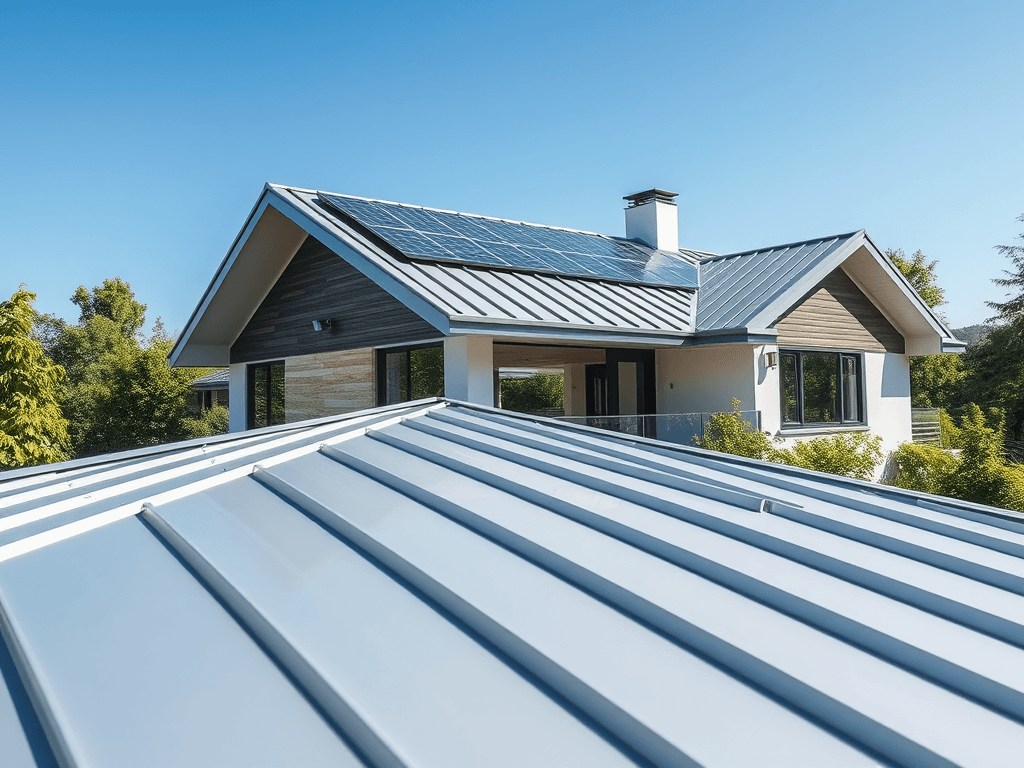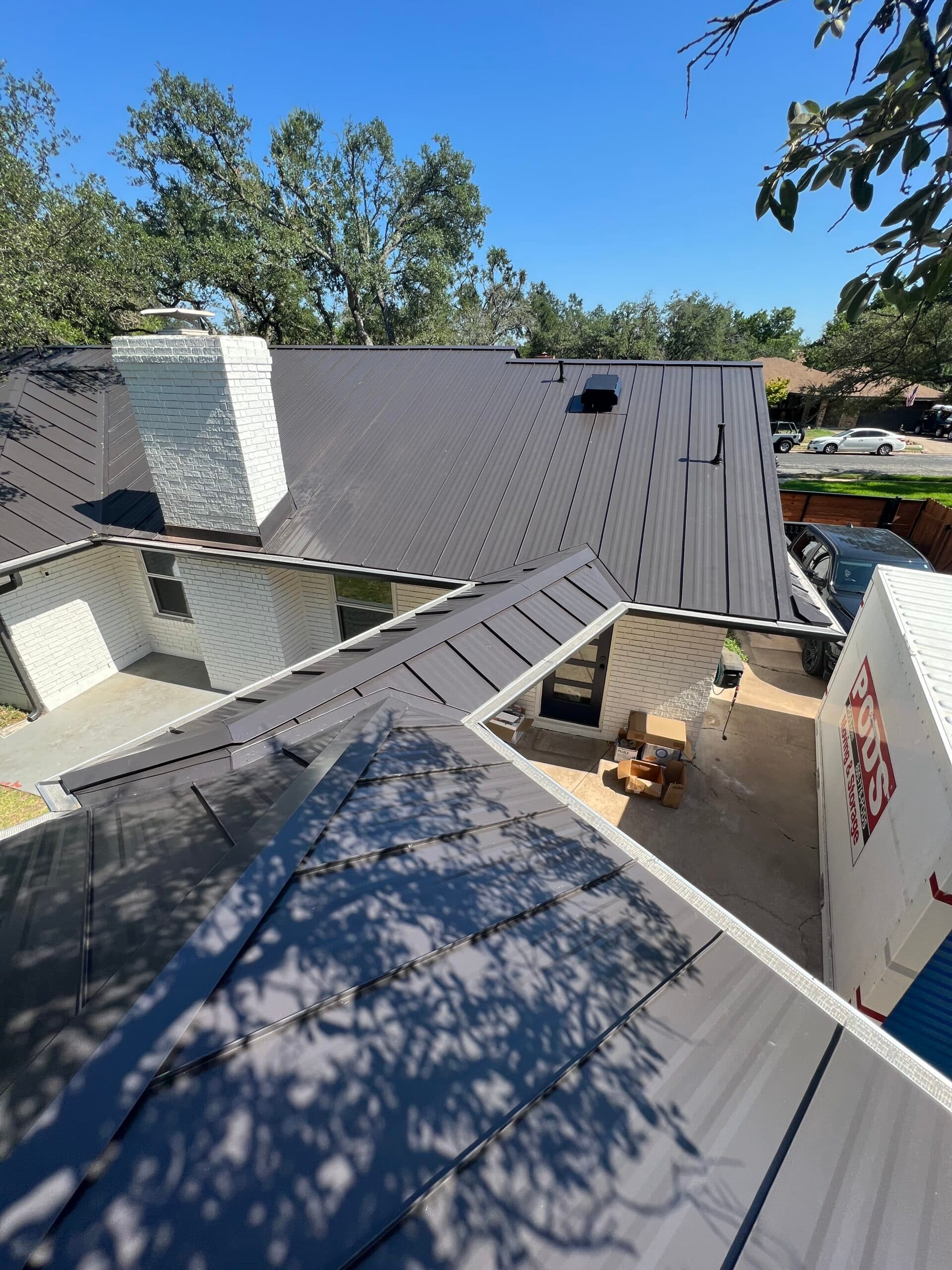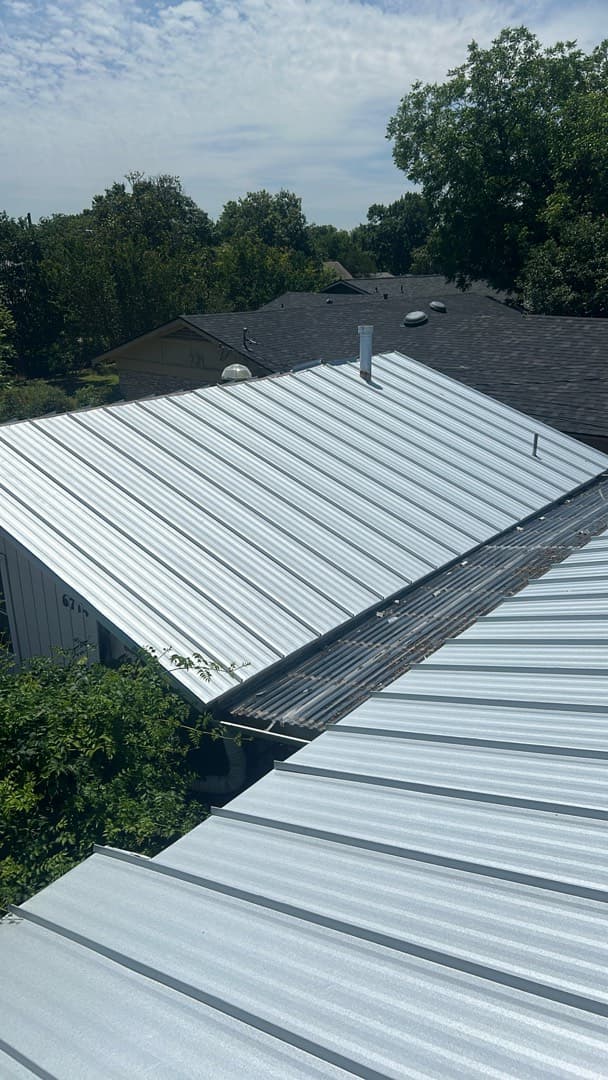
Cedar Park homeowners are navigating the same roofing equation driving standing seam adoption across the Austin metro: hailstorms that cost $20,000–$40,000 in shingle replacements, insurance premiums that have climbed sharply in recent years, and homes that have significantly appreciated and deserve a roofing investment that matches their current value.
Cedar Park's rapid growth means a mix of established neighborhoods with mature HOAs and newer developments where architectural standards are more flexible. This guide covers what standing seam actually costs here, how the major communities handle approvals, and what separates a proper installation from one that fails in a decade.
Standing Seam Costs in Cedar Park (2026)
Cedar Park pricing runs $14–$23 per square foot installed, consistent with the broader Austin-Round Rock metro.
| Home Size | Low | High | Typical |
|---|---|---|---|
| 1,500 sq ft | $21,000 | $34,500 | $27,000 |
| 2,000 sq ft | $28,000 | $46,000 | $35,000 |
| 2,500 sq ft | $35,000 | $57,500 | $44,000 |
| 3,000 sq ft | $42,000 | $69,000 | $53,000 |
| 3,500 sq ft | $49,000 | $80,500 | $62,000 |
Includes tear-off of one existing layer, deck inspection and minor repairs, high-temp peel-and-stick underlayment, all panels, trim, flashing, labor, permits, and cleanup.
Cedar Park-specific cost factors: The Williamson County–Travis County split within Cedar Park means some homes pull City of Cedar Park permits and others pull Travis County permits — we handle either. Homes in older Cedar Park sections (Anderson Mill corridor, Buttercup Creek) occasionally have tighter roof pitches or aging decking that needs repair before panels go on. We note all of this during the estimate so there are no surprises.
Cedar Park Neighborhoods: HOA Standing Seam Rules
Twin Creeks
Twin Creeks is one of Cedar Park's most established master-planned communities, centered on the Twin Creeks Country Club golf course. The HOA has formal architectural review.
Standing seam at Twin Creeks: The community leans traditional residential in character. Standing seam has been approved in neutral colors — Charcoal, Dark Bronze, Slate Gray — with clean profiles. Stone-coated steel is a reliable alternative for homeowners who want metal performance with a traditional look that's less likely to face pushback. Submit to the architectural review committee before ordering any materials; allow 2-4 weeks for the process.
Ranch at Brushy Creek
Ranch at Brushy Creek is an established premium community with strong architectural standards and an active HOA that reviews major exterior changes. Standing seam approval here is case-by-case. Contemporary homes with modern lines are the strongest candidates. A complete submittal package — panel specs, color samples, manufacturer documentation — significantly improves outcomes. Work with a contractor experienced in HOA submittals; the quality of the submittal matters.
Buttercup Creek
Buttercup Creek is an established Cedar Park neighborhood with a strong sense of community character. The HOA is active but has historically been reasonable about material choices when color and profile are appropriate. Standing seam in neutral tones has been approved here. Traditional color selections — Charcoal, Medium Bronze, Slate — coordinate well with the neighborhood's predominantly residential aesthetic.
Cat Hollow
Cat Hollow has a mix of architectural styles and HOA sections with varying oversight. Some sections have minimal material restrictions; others have more formal review. Pull your specific CC&Rs rather than relying on general community reputation — oversight varies by section within the same neighborhood name.
Carriage Hills
Established neighborhood with modest HOA oversight. Standing seam approvals have been relatively straightforward for appropriate color selections.
Newer Cedar Park Developments
Cedar Park's development from 2015 onward — along the Whitestone Boulevard corridor, near 183A, and in newer planned communities — generally has more flexible architectural guidelines that accommodate contemporary roofing systems. Many of these communities explicitly permit metal roofing in their current CC&Rs, though color restrictions typically apply. Verify with your specific community.
Unincorporated Areas
Parts of Cedar Park and surrounding areas fall outside incorporated limits with minimal deed restrictions. In these areas, standing seam is essentially unrestricted beyond building code requirements.
Cedar Park's Climate: Why Standing Seam Performs
Hail Exposure
Cedar Park sits in the same Central Texas hail corridor that regularly produces 1"+ hailstones. The Austin metro — including Cedar Park — averages 3-5 significant hailstorm events per year. Class 4 impact-rated standing seam survives these events with cosmetic denting at worst. Asphalt shingles typically require full replacement after a direct 1"+ impact.
Insurance impact: Class 4 impact-resistant standing seam qualifies for 15-35% premium discounts with most major Texas carriers. For Cedar Park homeowners paying $3,000–$5,000/year in homeowners insurance, that's $450–$1,750/year in savings — savings that compound across the roof's 50-70 year lifespan.
Summer Heat
Cedar Park's summer temperatures mirror the Austin metro: regular 100-108°F days through July and August. Cool-roof standing seam with PVDF coating reflects 65-70% of solar radiation versus 5-15% for dark asphalt, meaningfully reducing attic temperature and air conditioning load.
Estimated annual cooling savings for Cedar Park homes:
- 2,000 sq ft home: $400–$650/year
- 2,500 sq ft home: $500–$800/year
- 3,000 sq ft home: $600–$950/year
Standing Seam System Options for Cedar Park Homes
Snap-Lock vs. Mechanically Seamed
Snap-lock: Most common for residential applications with roof pitches of 3:12 or steeper. Panels interlock at the seam without requiring additional mechanical equipment. Well-suited for Cedar Park's standard residential pitches.
Mechanically seamed: Required for lower slopes — under 3:12. Cedar Park homes with covered porches, flat-roof additions, or any low-slope section need mechanically seamed panels for proper water management. Confirm your contractor owns and operates a mechanical seamer, not just a snap-lock crew.
Panel Materials
Painted Galvalume (PVDF coating): Most common for Cedar Park residential work. Full color palette, 40-year paint warranty, excellent cool-roof heat reflection.
Aluminum: Premium option, lighter weight, completely corrosion-immune. Increasingly popular for homeowners prioritizing maximum lifespan.
Natural Galvalume (mill finish): Zinc-aluminum appearance that weathers to a muted silver-gray. Popular for modern farmhouse and industrial aesthetics in Cedar Park's newer contemporary builds.
Finding a Qualified Standing Seam Contractor Near Cedar Park
Standing seam demands more of a contractor than asphalt shingles or even stone-coated steel. Manufacturer certification, proper tooling, and genuine experience with standing seam detailing at valleys, penetrations, and transitions are non-negotiable.
Vet every contractor with these questions:
- Are you certified with the panel manufacturer you're proposing?
- What's the seam type — snap-lock or mechanically seamed — and why is that right for my roof pitch?
- What underlayment do you specify? (High-temp peel-and-stick or premium synthetic — not standard #30 felt.)
- Fixed clips or floating clips? (Floating is required for Texas thermal expansion and contraction.)
- Can you provide references from Cedar Park or nearby Austin metro standing seam installations?
Any contractor who can't answer questions 1-4 specifically should not be installing standing seam on a home you're planning to keep.
We serve Cedar Park and the broader Austin metro. Contact us to discuss your project.
Frequently Asked Questions
Q: Does standing seam void my Cedar Park homeowners insurance? A: No — the opposite is true. Metal roofing with Class 4 impact resistance qualifies for premium discounts with most carriers. Contact your agent after installation to apply the discount. Some carriers require documentation of the material and UL rating; we provide a post-installation letter specifying these details.
Q: My Twin Creeks HOA denied standing seam — what now? A: Stone-coated steel (Decra or Metro Tiles) is the answer. It looks like traditional architectural shingles or tile but delivers identical performance to standing seam — 50-year lifespan, Class 4 impact resistance. Most Texas HOAs that restrict standing seam approve stone-coated steel without issue because the appearance aligns with their traditional standards.
Q: How does standing seam hold up in Cedar Park wind events? A: Standing seam panels with floating clips and interlocked seams are rated to 140+ mph wind uplift, significantly above what Cedar Park typically experiences in severe weather. Wind-related failures on properly installed standing seam are essentially unheard of.
Q: What's the realistic lifespan comparison between Class 4 asphalt and standing seam in Cedar Park's climate? A: Class 4 asphalt (Owens Corning Duration Storm, CertainTeed Landmark IR, etc.) typically delivers 25-35 years in Central Texas heat and UV before needing replacement. Standing seam delivers 50-70 years. Over a 70-year period, that's two or three asphalt cycles versus one standing seam installation.
Cedar Park homeowner ready to evaluate standing seam? Request a free estimate — we'll give you a written proposal with real numbers, HOA guidance if applicable, and an honest comparison against alternatives.