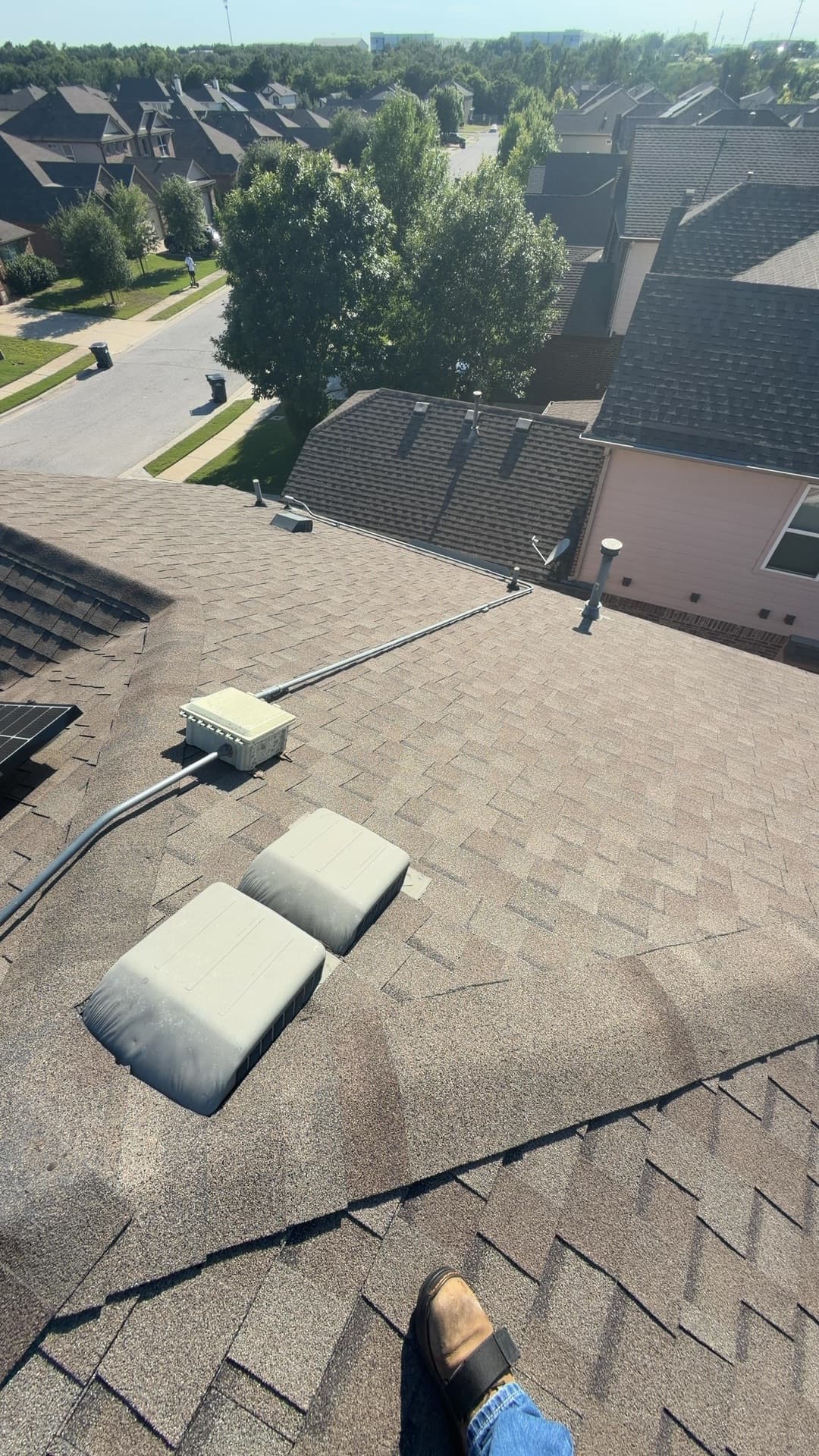
Most Taylor homeowners think about their roof twice: when something goes wrong and when they're replacing it. A roof inspection doesn't fit neatly into either category — it's the proactive step that happens between those two moments, and it's often what separates a $600 repair from a $18,000 replacement.
Roof inspections in Taylor TX serve several distinct purposes: routine maintenance assessment, post-storm damage documentation, pre-purchase due diligence when buying a home, pre-listing condition review when selling, and verification of warranty compliance. Each situation calls for a slightly different inspection focus, and understanding what you're actually getting in each case matters before you schedule anything.
This guide covers when to get a roof inspection in Taylor, what a genuinely thorough inspection actually covers (vs. a surface-level sales call), how to read an inspection report, and what to do with the findings.
5 Situations That Warrant a Roof Inspection in Taylor TX
1. Annual Maintenance Check
Even a relatively new roof benefits from annual inspection. Taylor's climate creates specific wear mechanisms: hail accumulation over multiple seasons, UV degradation accelerated by Texas sun, thermal cycling stress on sealants and pipe boots, and the occasional debris impact from the cedar and live oak that characterize residential landscaping in Williamson County.
Annual inspections catch small problems before they compound. A failing pipe boot seal that costs $175–$300 to fix becomes a rotted roof deck section costing $400–$800+ if water entry is allowed to continue for 2 years.
The best time for an annual inspection in Taylor: October or November, after the primary hail/storm season is over and before winter rains. This lets you address any storm-season damage before winter moisture adds to the problem.
2. After a Significant Storm
Williamson County sees meaningful hail events most years. The spring storm season (March through June) is the primary window, but fall events occur as well. After any storm that produced hail 3/4 inch or larger, or sustained wind gusts above 50 mph, a professional inspection is warranted.
Hail and wind damage to roofing systems often isn't visible from the ground. Functional damage to asphalt shingles — bruising of the mat, granule displacement, seal strip impact — typically requires roof-level inspection to identify. Homeowners who wait for visible damage before calling for inspection often find that the waiting period has added interior water damage to the claim.
Filing an insurance claim: If the inspection finds storm damage consistent with a covered event, the inspection report and supporting photos serve as the documentation foundation for your claim. This is discussed in more detail below.
3. Before Buying a Home in Taylor
Taylor's housing market has seen significant activity tied to Samsung's development and broader Williamson County growth. Buyers moving quickly in a competitive market sometimes treat the roofing portion of their due diligence as less urgent than they should.
The standard home inspection that occurs during a real estate transaction is not a roofing inspection. Home inspectors are generalists — they assess dozens of systems from foundation to electrical to HVAC. They typically walk the roof briefly, look for obvious issues, and note their general condition. They are not roofing specialists, they don't always identify hail damage, and their inspection does not include the attic-level view that reveals decking condition and moisture history.
A dedicated roofing inspection before close — or at least a condition for the contract that accounts for roofing findings — protects you from discovering that you've bought a home with 3 years of remaining shingle life when you thought you were buying a home with 12.
4. Before Selling Your Home
The flip side of the buying inspection: knowing your roof's condition before listing avoids surprises in the transaction. A buyer's inspection that turns up roofing issues at the 11th hour puts you in a negotiating disadvantage and can delay or derail a closing.
Listing with a recent roofing inspection report (ideally showing a clean bill of health, or evidence that you've addressed known issues) is an increasingly common practice in the Taylor market. It signals that the seller has taken care of the home and reduces buyer uncertainty — which supports the asking price.
5. After Visible Interior Symptoms
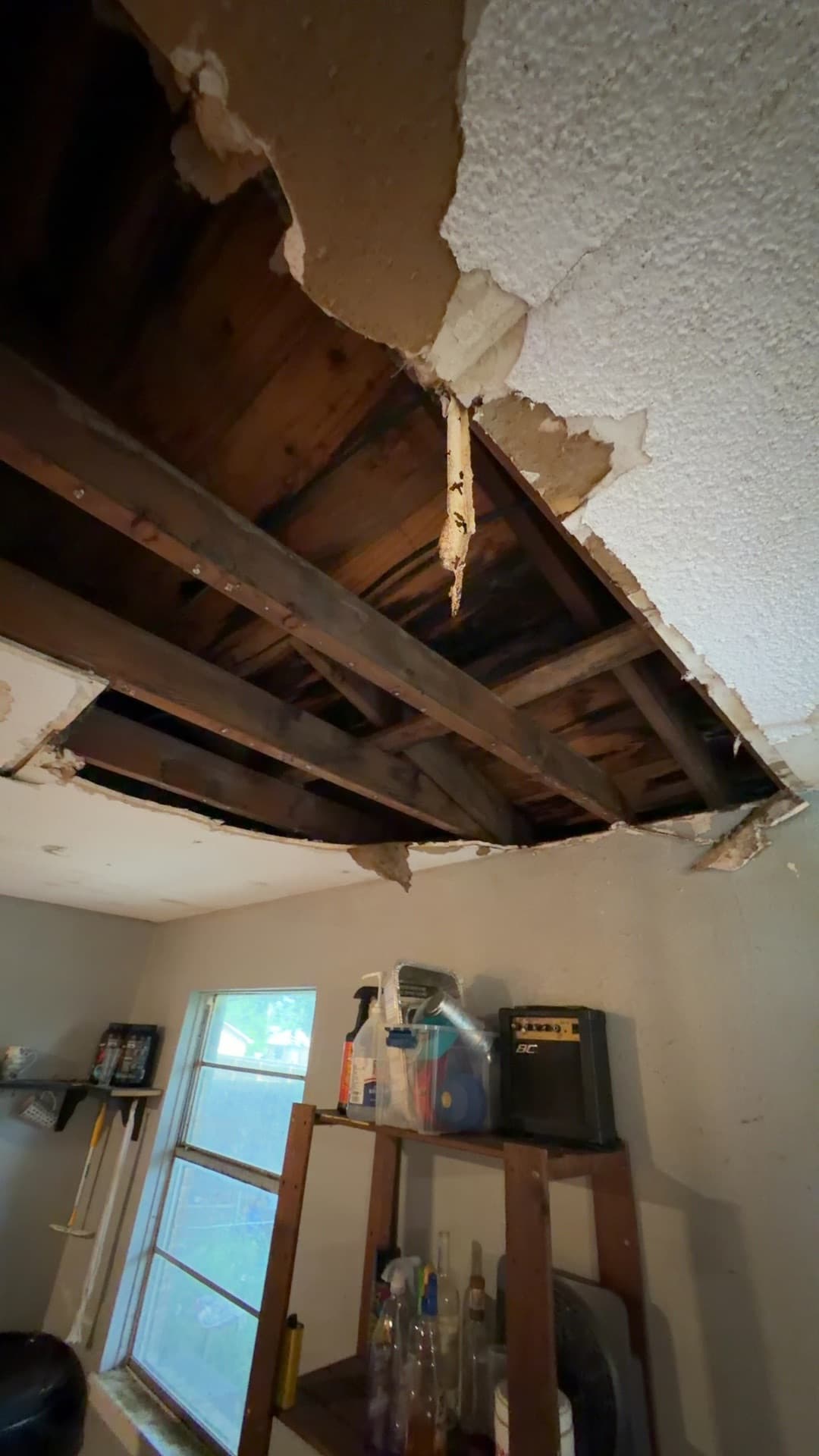
Water staining on ceilings, peeling paint on interior walls near roof penetrations, damp or musty smells in attic spaces, or ceiling fans that began wobbling after rain — all of these are signs that moisture has entered the roof assembly at some point. An inspection helps determine whether the source is active (the problem is ongoing) or historical (a past failure that's since been repaired or sealed naturally).
Don't wait for interior symptoms to get worse before scheduling. The relationship between roof damage and interior damage is always progressive — small exterior openings create increasingly large interior damage over time.
What a Thorough Roof Inspection Actually Covers
There's a significant difference between a contractor who spends 10 minutes on your roof taking two photos and hands you a summary, and a contractor who conducts a systematic, documented assessment. Here's what the latter looks like.
Exterior: Shingle or Roofing Surface
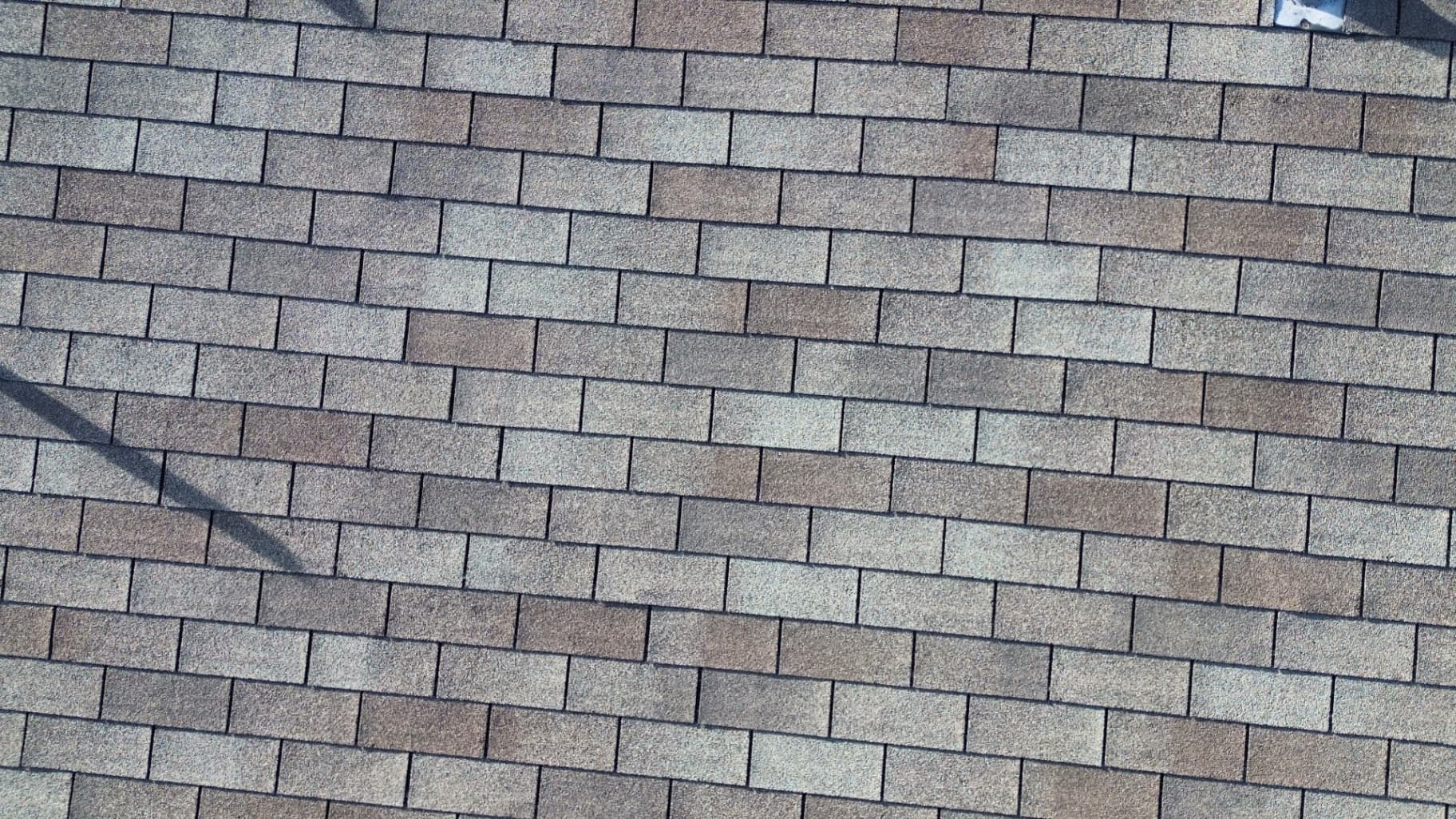
Shingle condition evaluation: Each shingle type fails differently. For architectural asphalt shingles, inspectors look for:
- Granule loss: Granules protect the asphalt mat from UV degradation. Bare or sparse patches accelerate aging dramatically. Granule accumulation in gutters is an indicator.
- Cupping and curling: Cupping (edges turning up) and curling (tabs bending upward away from the seal strip) indicate age-related moisture cycling and reduced remaining life.
- Bruising from hail impact: Soft spots in the mat visible or palpable at roof level, sometimes with granule-cleared "halos" around the impact point.
- Granule loss patterns: Circular granule-free areas in a pattern consistent with a hail storm vs. random granule loss consistent with wear.
- Cracking: Longitudinal cracks in the tab face indicate UV degradation; creasing across the tab indicates wind damage.
Ridge and hip cap condition: Ridge and hip cap shingles are among the first to fail due to their exposed position. Inspectors check for lifting, missing sections, and seal failure at end caps.
Valley condition: Valleys concentrate water flow from multiple roof planes. Open valleys (exposed metal) are checked for corrosion and proper lap; closed-cut valleys (shingles closed over the valley line) are checked for cracking and seal integrity.
Flashing Systems
Flashings are responsible for waterproofing every transition and penetration in the roof. They're also among the most common failure points — and among the most commonly under-inspected elements in a surface-level walkthrough.
Pipe boots and pipe collars: The rubber or neoprene seal around plumbing penetrations. In Taylor's UV environment, standard EPDM pipe boots degrade to the point of cracking within 10–15 years. A cracked pipe boot is an active leak point, even if the shingles around it look fine.
Step flashing at walls: Where a roof surface meets a vertical wall (dormers, additions, firewalls), step flashing is the waterproofing layer. Inspectors check for separation, rusting, and whether counter-flashing above the step flashing is secure.
Chimney flashing: Chimney flashing is one of the most common leak sources in older Taylor homes. It consists of multiple components (base flashing, step flashing, cap/counter flashing, and ideally a saddle or cricket on the upslope side). Any of these can fail independently.
Skylight flashing: Similar to chimneys — multiple components, multiple failure points. Inspectors check the perimeter flashing and the transition from the skylight frame to the roofing material.
Drip edge: Metal drip edge along the eaves and rakes prevents water from wicking back under the roofing material. Missing, bent, or corroded drip edge is common on older homes.
Gutters and Drainage
While not strictly part of the roof, gutters are inspected as part of the drainage system:
- Attachment to fascia (hanger spacing and security)
- Pitch (gutters should slope 1/4 inch per 10 feet toward outlets)
- Condition (holes, rust, separation at seams)
- Downspout attachment and discharge direction
Soffit and Fascia
- Soffit panels for damage, missing sections, or inadequate ventilation openings
- Fascia boards for rot (often hidden behind gutters)
- Evidence of animal entry through soffit gaps
Attic Inspection
The attic view is often where the most important information lives — and it's the most commonly skipped element in quick inspections.
Attic moisture indicators: Water stains on decking, black mold growth on rafters or sheathing, frost lines (in rare Taylor winter events), or wet insulation are all signs of past or present moisture intrusion.
Decking condition: Plywood or OSB decking is inspected for soft spots, delamination, or sagging. Board sheathing (common in pre-1970 Taylor homes) is checked for rot and structural integrity.
Ventilation assessment: Proper attic ventilation requires balanced intake (at the soffits) and exhaust (at or near the ridge). Blocked soffits, inadequate ridge ventilation, and improperly installed bath or kitchen fans exhausting into attic space rather than outside are common issues. Poor ventilation accelerates shingle degradation and creates moisture accumulation problems.
Rafter and ridge board condition: In older homes, rafters and the ridge board should be inspected for any deflection or cracking that would indicate structural issues.
HAAG Certification: Why It Matters for Storm Damage Inspections
HAAG Engineering is the gold standard in forensic roof inspection for insurance claims. HAAG-certified inspectors have completed specialized training in identifying storm damage patterns, distinguishing between storm-caused damage and age/wear, and producing documentation that holds up to carrier scrutiny.
Not every roof inspection requires HAAG certification — routine maintenance inspections don't need forensic-level analysis. But when a storm damage insurance claim is involved, working with a contractor who has HAAG-certified inspectors (or works with HAAG-certified engineers) provides meaningfully better documentation and more credible findings than an uncertified inspection.
If you're filing or considering filing a hail or wind damage insurance claim, ask your contractor specifically about their inspection credentials. HAAG certification doesn't guarantee outcomes, but it signals that the inspector knows the difference between storm damage and normal wear — a distinction that matters greatly to an insurance adjuster.
What Separates a Real Inspection From a Sales Visit
This distinction is worth understanding clearly, because not all contractor "free inspections" are the same.
A legitimate inspection:
- Involves time on the roof (minimum 20–30 minutes for a standard Taylor home; longer for complex roofs)
- Includes attic assessment when accessible
- Produces a written report with photos, condition notes by section, and specific findings
- Gives you honest information even if the findings support not replacing the roof
- Doesn't pressure you to sign anything at the inspection visit
A sales visit disguised as an inspection:
- Brief — 10 minutes or less on the roof
- No written report or a generic template with checkboxes
- Findings always recommend replacement regardless of actual condition
- Pressure to sign a contract or an Assignment of Benefits (AOB) at the visit
- Often conducted by a salesperson, not an experienced roofing technician
The "free inspection" marketing that follows every major Williamson County storm event is often in the second category. That doesn't mean free inspections are worthless — many legitimate contractors offer free inspections as a genuine service. The differentiator is the depth of the process and whether you feel informed or pressured when it's done.
How to Do a Basic Ground-Level Visual Inspection Yourself
You don't need to get on your roof to do a meaningful first assessment. Here's what to look for from the ground (preferably with binoculars for the close-up evaluation).
From the street and yard, look at:
- The ridgeline: Should be straight and continuous. Gaps, missing cap shingles, or irregular texture indicate damage.
- The eave line: Should be straight. Sagging in the middle of a run can indicate rafter issues or gutter weight problems.
- Overall shingle surface: Look for dark patches (missing shingles), color variation (sections of different age shingles from past repairs), or obvious blistering.
- Flashing around chimneys and skylights: Should be tight to the surface, not lifted or gapped.
- Gutter alignment: Gutters should follow the eave continuously without visible gaps or separation from the fascia.
From the perimeter close up, look at:
- The bottom edge of shingles (the tabs): Are any curled upward or visibly separated from the course below?
- Granule accumulation in gutters: Normal in small amounts; significant accumulation signals active granule loss.
- Moss or algae growth: Black streaking (Gloeocapsa magma algae) on shingles indicates moisture retention and aging.
- Soffit panels: Missing, cracked, or damaged panels are visible from below.
What only a contractor can assess:
- Shingle mat condition (bruising requires touch, not just sight)
- Flashing seal integrity at penetrations
- Decking condition
- Attic ventilation and moisture status
The ground-level self-inspection tells you whether you have obvious problems requiring urgent attention. It doesn't substitute for a professional inspection — but it helps you know when to make that call.
Free Inspections: What's Real and What's a Sales Tactic
Free inspections are a standard marketing practice for roofing contractors — and they can be genuinely valuable or largely a pretext for a sales visit, depending on who's doing them.
What makes a free inspection legitimate: The contractor invests real time, produces honest findings, and provides value whether you end up replacing your roof or not. If their findings show your roof has 8 years of life left, they tell you that and recommend re-inspecting in 5 years. The value to them is brand exposure and a future customer relationship; the value to you is real information.
What makes a free inspection a concern: The contractor's findings always support the highest-cost recommendation (replacement, not repair). The inspector can't explain specific findings when asked. The visit concludes with pressure to sign paperwork rather than just a report. The "inspection" took 8 minutes.
The Assignment of Benefits (AOB) issue: Some contractors — particularly those following storm events — offer free inspections in exchange for signing an AOB that transfers your insurance claim rights to them. An AOB is a legal document with real consequences: you're no longer the party negotiating with your insurance carrier. Signing an AOB before you've decided on a contractor, or before you understand your claim options, is a step that's very difficult to reverse. Don't sign an AOB at an initial inspection visit.
Roof Inspection When Buying a Home in Taylor TX
The Taylor real estate market has moved quickly in the Samsung-era growth period, and some buyers have felt pressure to waive inspection contingencies or minimize due diligence timelines. For a home where the roof shows any uncertainty, that's a significant risk.
What your general home inspector will and won't find: A general home inspector is required to flag obvious roof issues — missing shingles, visible damage, visible water staining. They are not required to walk the roof (some only inspect from a ladder at the eave or from the ground), and they are not trained to identify hail damage, advanced granule loss, or nuanced flashing failures. Their report on roof condition is appropriately generic: "appears serviceable" or "recommend evaluation by roofing specialist."
Requesting a dedicated roofing inspection: If the home inspector notes any concerns about the roof, or if the home is more than 10 years old and there's no documentation of a recent roof replacement, scheduling a dedicated roofing inspection as part of your due diligence period is a reasonable and inexpensive step ($0–$150 for the inspection itself).
Using findings in negotiation: A roof inspection finding that the roof has 3–5 years of remaining life is negotiating leverage. You can request a price reduction reflecting the near-term replacement cost, a seller-funded replacement before close, or a credit at close. How aggressively you pursue any of these depends on market conditions and how much you want the house — but knowing the condition is better than being surprised.
Roof Inspections for Insurance Claims in Taylor TX
When a storm damage insurance claim is involved, the roof inspection serves as the evidence foundation for the claim. The quality of documentation at this stage meaningfully affects claim outcomes.
Before the adjuster visits: A contractor inspection conducted before the insurance adjuster's visit creates an independent, early-documented record of the roof condition in the aftermath of the storm. This matters because adjusters may not visit until weeks after the event, during which time weather, roof traffic, and temporary repairs have altered what's visible. Your contractor's dated report, with photos of specific damage, is the contemporaneous record.
The adjuster inspection: The carrier's adjuster is looking for the same things your contractor is — hail impact patterns, wind damage, granule loss, flashing issues. But the adjuster's interests are not identical to yours. Having your contractor present at the adjuster inspection is standard practice and gives you an advocate who can point to specific damage the adjuster might otherwise miss or characterize as wear rather than storm damage.
Supplement and dispute: If the adjuster's scope is narrower than your contractor's inspection findings, a supplement process is appropriate — your contractor formally challenges specific line items and provides additional documentation supporting the broader scope. This is a normal part of the claims process, not a confrontation.
What a Good Inspection Report Looks Like
After a thorough inspection, you should receive a written document that includes:
- Date and address of the inspection
- Overall condition assessment: Life expectancy estimate, recommendation (monitor / repair / replace)
- Section-by-section findings: Ridge, slopes by direction, valleys, flashings, gutters, soffit/fascia, attic — with specific notes for each
- Photos: Keyed to specific findings (not just generic shots). A good report has a photo for every finding it documents.
- Storm damage documentation (if applicable): Specific hail impact notation with size estimate, wind damage characterization, and weather event context
- Repair vs. replace recommendation: Specific about what work addresses which finding
A one-page checklist with generic ratings is not a thorough inspection report. If your contractor's report doesn't give you enough information to understand specifically what's wrong and why, ask for more detail before proceeding.
Frequently Asked Questions: Roof Inspections in Taylor TX
How much does a roof inspection cost in Taylor TX? Many contractors in the Taylor area offer free inspections. Paid inspection fees run $100–$250 for a thorough documented inspection. Some structural engineering or HAAG forensic inspections cost more — $300–$600 — for complex insurance claim situations.
How long does a roof inspection take? A thorough inspection of a standard Taylor home takes 45 minutes to 1.5 hours — 20–40 minutes on the roof, 10–20 minutes in the attic, and time for documentation. Inspections completed in 15 minutes or less are unlikely to be thorough.
Do I need to be home during the inspection? Helpful but not required for the exterior. For the attic portion, someone needs to provide access to the attic hatch. You should plan to be present for the post-inspection walkthrough when findings are reviewed.
How often should a Taylor TX roof be inspected? Annual inspections are recommended. After any Williamson County storm event with documented hail 3/4 inch or larger or wind gusts above 50 mph, an additional inspection is warranted regardless of when the last routine inspection occurred.
Can a roof inspection be wrong? Yes. An inspection is a point-in-time assessment by a human inspector working with the visibility and access conditions present that day. Attic access limitations, roofing material over existing material, and conditions that weren't visible at inspection time can all result in findings that don't reflect the full picture. The quality of the inspector matters.
Does a roof inspection guarantee the roof won't leak? No. An inspection assesses visible condition and known failure patterns. It doesn't predict every possible future failure mode, and it's limited by what's observable at the time of inspection. A clear inspection report reduces risk; it doesn't eliminate it.
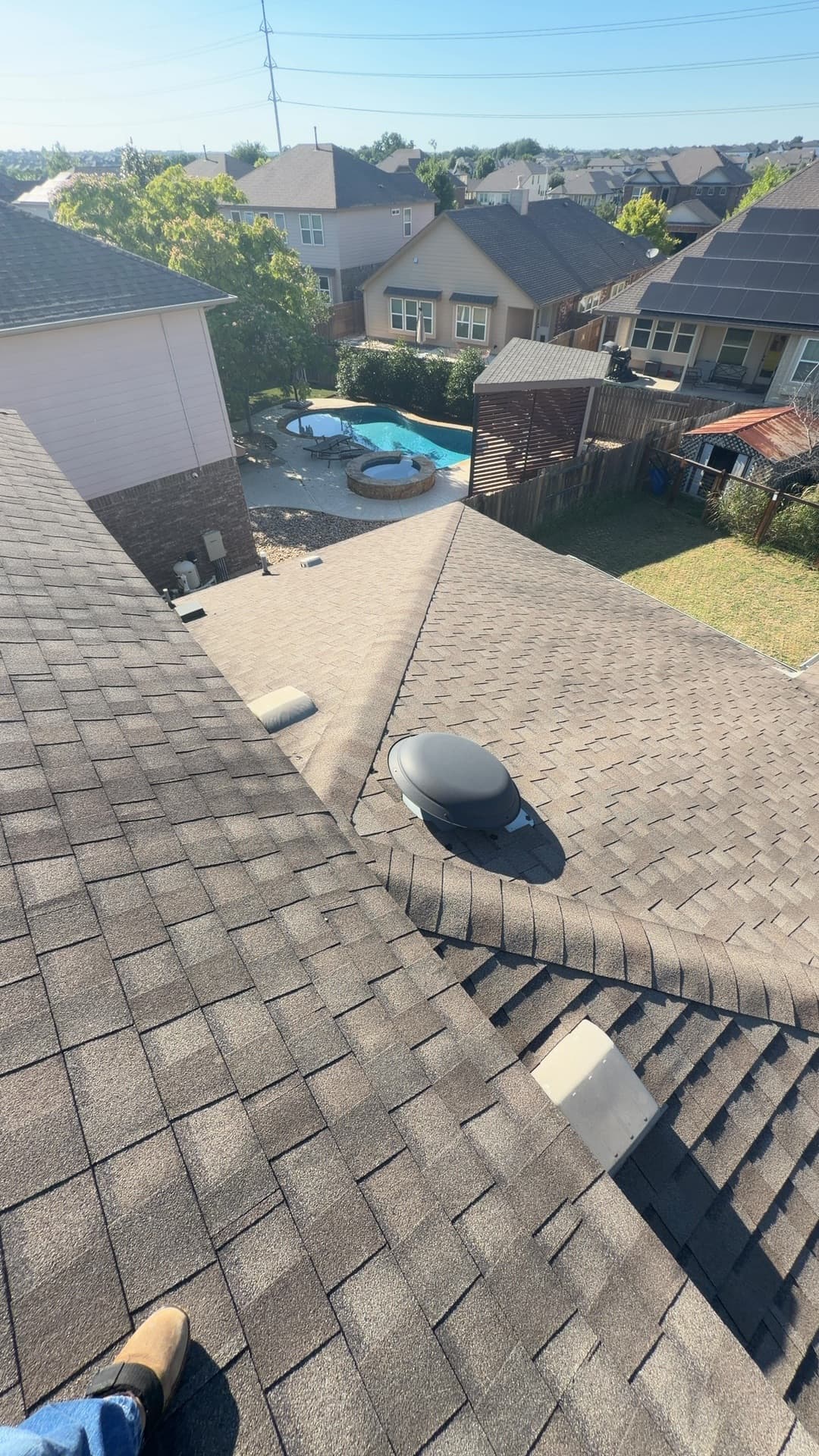
Will the inspector walk on my roof? A thorough inspection requires time on the roof for close assessment of shingles, penetrations, and flashings. Some inspectors use drones to supplement, particularly on very steep roofs. Drone inspection alone — without roof-level assessment — is not adequate for finding hail bruising or flashing seal failures.
Should I get a roof inspection before my home's first storm season? If you've recently moved into a home in Taylor — purchased an existing home or moved into a new construction — a baseline inspection in year 1 documents the starting condition. This baseline is valuable if you subsequently need to file a storm damage claim, because it establishes what the roof looked like before the event.
Schedule a Roof Inspection in Taylor TX
Ripple Roofing offers free roof inspections throughout Taylor, TX and Williamson County. We're a CertainTeed ShingleMaster Premier certified contractor with experienced inspectors who assess the full system — not just the surface — and produce written inspection reports with photo documentation.
Schedule Your Free Inspection — or call us at 512-763-5277. We respond same business day and can usually schedule within a week.