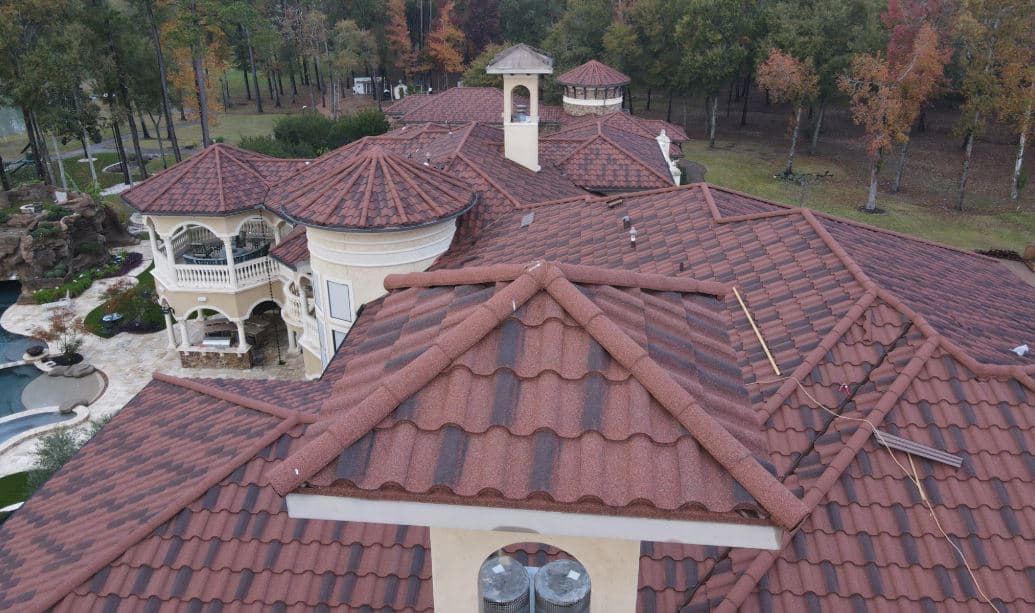
Stone-coated steel occupies a unique position in the roofing market: it looks like asphalt shingles or tile from the street, performs like metal in a storm, and carries a 40–50 year warranty that most architectural shingle products can't match. For Taylor, TX homeowners who want the protection of metal roofing but hesitate at the visual change of a standing seam system — or who have HOA restrictions that require a traditional-looking roof — stone-coated steel is often the answer.
This guide covers everything specific to stone-coated steel in the Taylor TX context: how the product is made, which brands and profiles are available, what it actually costs installed in Williamson County in 2026, how it performs against Taylor's climate challenges, and when to choose stone-coated steel instead of standing seam metal or premium architectural shingles.
What Stone-Coated Steel Actually Is
Stone-coated steel isn't just metal with gravel on top. The manufacturing process creates a composite material that's meaningfully different from both traditional metal panels and asphalt shingles.
The Manufacturing Process
Steel core: The foundation is a steel panel (typically 26-gauge) coated with a zinc-aluminum alloy (Galvalume) on both sides. This Galvalume coating provides corrosion resistance — zinc sacrificially protects the steel, while aluminum provides barrier protection. The steel core provides structural integrity and impact resistance.
Acrylic base coat: A layer of acrylic is applied over the Galvalume surface to provide adhesion for the stone coating and additional corrosion protection.
Stone chip application: Ceramic-coated stone granules — similar to the granules used on asphalt shingles, but kiln-fired and more durable — are embedded in the acrylic base coat while it's still wet. The granules are what give the product its visual similarity to traditional roofing materials. They also add thermal mass, absorb sound (important for metal roofing's noise reputation), and provide additional UV protection for the steel core beneath.
Acrylic topcoat: A final acrylic overglaze seals the stone chips into the panel surface and provides weather resistance.
The result is a panel with steel strength, granule aesthetics, and a composite structure that doesn't behave purely like either metal or asphalt.
Why This Matters for Taylor Homeowners
The specific construction of stone-coated steel determines several performance characteristics that are particularly relevant in Central Texas:
- The steel core provides Class 4 impact resistance without relying on material thickness alone
- The stone granules dampen sound transmission during rain (addressing the "loud metal roof" concern)
- The Galvalume coating provides corrosion resistance in Taylor's variable humidity
- The acrylic system maintains color stability under intense UV exposure
- The composite structure provides thermal mass that moderates surface temperature cycling
Stone-Coated Steel Profiles Available in Taylor TX
Stone-coated steel panels are pressed into profiles that mimic different traditional roofing materials. The profile you choose affects the look of the finished roof significantly; the performance characteristics are largely the same across profiles.
Shingle Profile (Most Common)
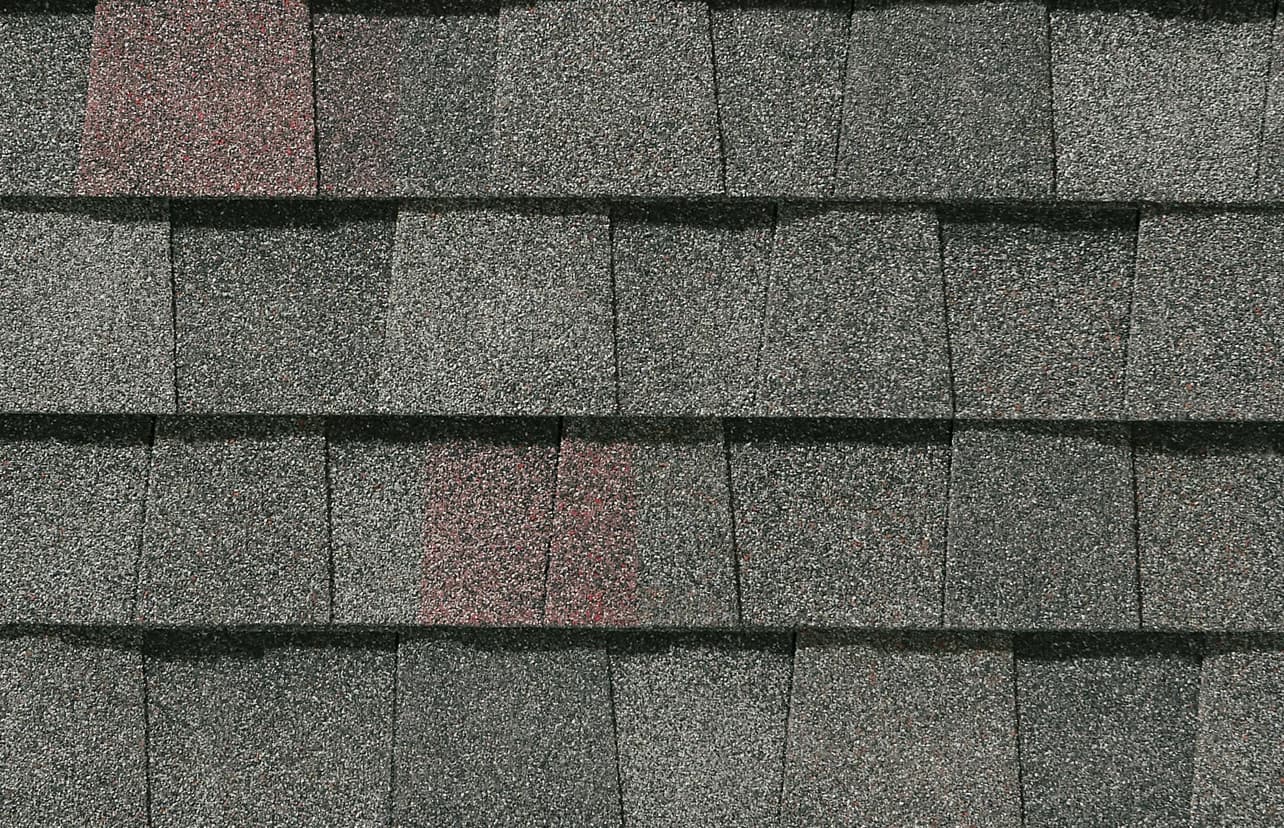
The shingle profile is designed to mimic the appearance of layered architectural asphalt shingles. Panels are shaped to look like 3–4 courses of dimensional shingles — with defined shadow lines that give the roof visual depth similar to a premium asphalt shingle product.
This is the most popular profile in Taylor and Williamson County because it's the closest to what neighbors and potential buyers expect to see on a residential roof. The visual change from the street is minimal compared to the actual performance upgrade.
Best for: Mid-century and contemporary Taylor homes in residential neighborhoods where a traditional shingle look is expected or required.
Tile Profile
The tile profile mimics the curved barrel tile or flat concrete tile look common in Mediterranean and Spanish Colonial architecture. The wave profile of the panels creates significant visual character — more distinctive than the shingle profile, and more dramatic.
In Taylor TX, tile-profile stone-coated steel is less common than shingle profile but appropriate for:
- Homes with existing Mediterranean or Spanish Colonial aesthetic elements
- Homeowners upgrading from actual concrete or clay tile who want lower weight with similar appearance
- New construction or renovation projects designed around a tile look
The tile profile is heavier per square foot than the shingle profile, though still significantly lighter than actual concrete or clay tile.
Shake Profile
The shake profile mimics wood shake or cedar shake roofing — a textured, variable surface with natural-looking wood grain pattern pressed into the panel. This is a less common but visually distinctive option.
Best for: Craftsman, Colonial Revival, or rustic architectural styles where a wood shake appearance fits the design. Also appropriate for the historic Taylor downtown area where cedar shake was historically used on some higher-end homes.
The Major Stone-Coated Steel Brands
Several manufacturers produce stone-coated steel roofing products sold in the Central Texas market. The three most established are Decra, EDCO, and Westlake Royal (formerly Boral).
Decra
Decra (part of the Westlake Royal portfolio, but maintaining its own brand identity) is one of the oldest stone-coated steel brands, established in the 1950s. Decra products are available in shingle, tile, and shake profiles, and the brand is widely recognized by insurance adjusters and carriers as a legitimate Class 4 product.
Decra profile lines: Villa Tile (tile), Shake XD (shake), Shingle Plus (shingle). Each has profile-specific warranty terms; the flagship products carry a 50-year limited warranty.
The Decra drainage system: Decra products feature a patented water management channel along the panel edges that directs water away from the attachment points and toward the panel face. This design minimizes water infiltration at seams and is one of the engineering differentiators of the Decra system.
EDCO
EDCO (Energy Design Company) produces stone-coated steel under the Bellaforté brand. EDCO Bellaforté products are manufactured in a variety of profiles (Shake, Slate, Tile, Shingle) and are distinguished by their use of AcraCote — a proprietary acrylic system applied before stone embedding that EDCO credits with superior granule adhesion compared to competitors.
EDCO Bellaforté Shake is one of the more visually realistic shake-profile products in the stone-coated category. EDCO's shingle profile is a strong competitor to Decra in the residential market.
Warranty: 50-year limited transferable warranty on EDCO Bellaforté products.
Westlake Royal Building Products (Including Gerard)
Westlake Royal Building Products markets stone-coated steel under the Gerard brand in some markets. Gerard was originally an independent brand (rooted in New Zealand, where stone-coated steel has decades of market history) and was acquired into the Westlake Royal portfolio. Gerard products use a slightly different granule application system than Decra and EDCO.
In the Central Texas market, Gerard is less commonly specified than Decra or EDCO, but it's a legitimate product line with comparable warranty terms.
Brand Comparison at a Glance
| Feature | Decra | EDCO Bellaforté | Gerard |
|---|---|---|---|
| Profiles available | Shingle, Tile, Shake | Shake, Slate, Tile, Shingle | Shingle, Tile, Shake |
| Warranty | 50-year limited | 50-year limited | 50-year limited |
| Class 4 certified | Yes | Yes | Yes |
| Wind rating | 120 mph | 130 mph | 120 mph |
| Country of origin | USA | USA | Various |
Stone-Coated Steel Performance in Taylor TX's Climate
The performance characteristics of stone-coated steel map directly onto Taylor's specific climate challenges.
Hail Impact Resistance
All major stone-coated steel products carry UL 2218 Class 4 certification — the highest available impact resistance rating. The testing protocol involves dropping 2-inch diameter steel balls from 20 feet onto the panel surface with no functional damage. Real-world hail up to approximately 1.75–2 inches in diameter does not cause functional damage to properly installed Class 4 stone-coated steel.
This is particularly significant in Williamson County, where the historical hail record includes multiple events with 1.5–2+ inch hail in the Taylor area. A roof that can sustain those events without functional damage eliminates the replacement cycle that asphalt shingle roofs face after major hail.
Cosmetic damage caveat: Large hail (2+ inch diameter) can dent the steel panels of stone-coated products without causing functional damage. If your insurance policy has a cosmetic damage exclusion, confirm whether dented stone-coated steel panels are covered. This is a policy review question, not a product defect issue.
Wind Resistance
Stone-coated steel panels interlock at the edges and attach to battens (horizontal wood runners across the roof deck) with corrosion-resistant fasteners driven into the battens, not through the exposed face. This attachment system provides wind uplift resistance in the 120–130 mph range for most products — exceeding standard residential code requirements and performing well above what most Taylor weather events produce.
Heat Management
The stone granule surface of stone-coated steel reflects more solar radiation than a flat metal surface. While stone-coated steel isn't as thermally efficient as a cool-roof-rated standing seam panel with a highly reflective PVDF coating, the granule surface provides meaningful heat mitigation compared to dark asphalt shingles.
Stone-coated steel is available in light and medium color ranges that further improve solar reflectance. Choosing a lighter color option (tan, light gray, lighter brown) over a dark brown or charcoal option meaningfully reduces surface temperature and attic heat gain in Central Texas summer.
Rain Performance and Sound
The unique drainage channel design of products like Decra manages water at panel edges, minimizing the opportunity for water to work into the fastener zone. Unlike exposed-fastener metal systems, stone-coated steel panels don't have screws through the panel face that can leak as fastener seals degrade.
Sound: the stone granule surface on stone-coated steel panels significantly dampens rain sound compared to bare metal panels. This is one of the most common concerns homeowners raise about metal roofing, and stone-coated steel addresses it more effectively than standing seam or exposed-fastener systems. Attic insulation beneath the panel further reduces any rain sound transmission.
Stone-Coated Steel Cost in Taylor TX: 2026 Installed Pricing
Stone-coated steel is a premium roofing product — the installed cost is 1.5–2x the cost of architectural shingles and approximately 70–80% of the cost of standing seam for the same home. Here are realistic installed cost ranges for Taylor TX homes in 2026.
| Home Size | Architectural Shingles | Stone-Coated Steel | Standing Seam |
|---|---|---|---|
| 1,500 sf | $12,000–$16,000 | $18,000–$26,000 | $22,000–$32,000 |
| 2,000 sf | $15,000–$20,000 | $24,000–$34,000 | $29,000–$42,000 |
| 2,500 sf | $18,000–$25,000 | $30,000–$43,000 | $36,000–$52,000 |
| 3,000 sf | $22,000–$30,000 | $36,000–$52,000 | $43,000–$62,000 |
All prices reflect full project cost: tear-off, decking inspection/repair, underlayment, stone-coated steel system, flashings, trim, and cleanup.
What Affects Cost Within This Range
Roof complexity: More valleys, more penetrations, steeper pitch = more labor. A simple 4:12 hip roof with 2 penetrations is at the low end; a complex roof with dormers, multiple valleys, and 8+ penetrations is at the high.
Decking condition: If decking needs partial or complete replacement, add $1–$3 per square foot for OSB.
Substrate preparation: Stone-coated steel installs on a batten system, not directly on the deck. Batten installation adds modest cost over a direct-to-deck installation, but the batten system is part of the product system and should be included in any legitimate estimate.
Product selection: Products vary in cost; Decra and EDCO Bellaforté are typically at similar price points; some generic stone-coated products from less-established brands cost less but may have shorter warranty terms and less installer support.
Stone-Coated Steel vs. Architectural Shingles
The comparison most Taylor homeowners need to make first.
| Factor | Architectural Shingles | Stone-Coated Steel |
|---|---|---|
| Upfront cost | Lower by 30–50% | Higher |
| Lifespan | 20–30 years | 40–50 years |
| Replacement cycles over 50 years | 1–2 replacements | 0 (one installation) |
| Class 4 impact resistance | Only on specific IR products | Standard on all products |
| Insurance discount | 10–20% (Class 4 IR shingles) | 10–30% |
| Maintenance | Annual inspection; periodic repair | Minimal |
| After-storm repair likelihood | High (hail climate) | Very low |
| Wind rating | 110–150 mph depending on product | 120–130 mph |
| HOA compatibility | Always | Usually (shingle profile) |
| Resale value | Baseline | Moderate premium |
The long-term cost equation often favors stone-coated steel for homeowners who plan to stay in Taylor for 15+ years. You pay more upfront, but you eliminate a replacement cycle and reduce ongoing maintenance and repair costs over the ownership period.
Stone-Coated Steel vs. Standing Seam: Which Metal System Is Right for You?
For Taylor homeowners who've decided on metal, the choice between stone-coated steel and standing seam comes down to several factors.
Choose stone-coated steel when:
- Your neighborhood has traditional or conservative aesthetics and you want to match existing homes
- Your HOA restricts "metal roofing" but doesn't specifically disallow stone-coated steel (these cases should be confirmed in writing with the HOA)
- You want the insurance discount benefits of Class 4 at a lower price point than standing seam
- Your home's architecture is mid-century or traditional and a standing seam visual profile would look out of character
Choose standing seam when:
- You want the maximum possible long-term performance (concealed fastener systems have fewer long-term failure modes than any fastened-through-substrate system)
- Your home has contemporary, modern, or craftsman architecture that pairs naturally with standing seam panels
- Your HOA specifically allows or approves standing seam
- You're making a top-tier investment and want the most premium system available
Both systems provide Class 4 hail resistance and similar insurance discount eligibility. The differences are primarily aesthetic and in the failure mode landscape — standing seam concealed fasteners vs. stone-coated steel batten attachment each have long track records with minimal failure rates in residential applications. If you're leaning toward standing seam, our standing seam guide for Taylor homes covers cost, hail performance, and what older board-sheathed houses need.
Insurance Discounts for Stone-Coated Steel in Taylor TX
Because all major stone-coated steel products carry Class 4 UL 2218 certification, they qualify for the same impact-resistant roofing discounts as Class 4 asphalt shingles and metal panels.
Discount ranges by carrier in Williamson County:
- State Farm: 10–20%
- Allstate: 5–20%
- Farmers: 10–25%
- USAA: Contact directly
- Texas Farm Bureau: Up to 30% in some areas
To access the discount:
- Obtain a copy of the product's UL 2218 Class 4 test report from your contractor
- Notify your insurance agent before or during installation
- Submit the test report and installation documentation (permit, contractor invoice) to your carrier at completion
- Request a premium review effective on the completion date
For a Taylor homeowner paying $3,000/year in home insurance, a 20% discount on the dwelling portion saves $400–$600 annually. Over a 40-year roof lifespan, that's $16,000–$24,000 in recovered premiums — significant against the cost premium of stone-coated steel over standard shingles.
What the Installation Process Looks Like
Stone-coated steel installation differs from asphalt shingle installation in a few key ways that affect timeline and cost.
Tear-off and deck prep: Same as any replacement — existing roofing is removed to the deck, decking is inspected and repaired, and then the substrate preparation process begins.
Batten installation: Unlike asphalt shingles (which are nailed directly to the deck) or standing seam (nailed to the deck through a clip system), stone-coated steel panels attach to a horizontal batten system installed across the roof. Battens are typically 1×4 or 2×4 pressure-treated lumber strips run horizontally from rake to rake at spacing determined by the specific panel system. This batten system must be correctly installed to meet wind load requirements and enable the panel system's drainage design to function properly.
Underlayment: A self-adhering underlayment is typically installed over the deck before the battens, creating a secondary waterproof layer beneath the panels. This layer matters — if any water finds a path beneath the panels (at a flashing failure, for example), the underlayment is the second line of defense.
Panel installation: Panels are installed from the eave to the ridge in courses, interlocking at the edges and fastening to the battens. Panels are cut with shears, not saws, to prevent heat-induced cut-edge corrosion.
Flashing and trim: Custom flashings at valleys, rakes, ridges, and penetrations must be fabricated to integrate with the specific panel system. This is a skill area where installer experience matters — contractors who have installed the specific product system they're using will have the flashing details right; contractors adapting from asphalt shingle installations may not.
Timeline: A standard 2,000–2,500 sf Taylor home takes 3–5 days for stone-coated steel installation.
Lifespan, Maintenance, and HOA Considerations
Lifespan: Stone-coated steel products carry 40–50 year limited transferable warranties. Real-world performance data from the oldest stone-coated steel installations (1950s and 1960s in New Zealand and Australia, where the product originated) supports the durability claim — panels from that era are still in service.
Maintenance: Minimal compared to asphalt. Annual inspection of flashings and penetrations is appropriate. The stone granule surface doesn't require granule replacement (unlike asphalt, where granule loss is a terminal condition). Occasional cleaning to remove debris and prevent moss growth is appropriate in areas with significant tree canopy.
HOA compatibility: Stone-coated steel in shingle profile is visually indistinguishable from premium asphalt shingles by most observers. HOAs that restrict metal roofing based on aesthetics often allow stone-coated steel because it doesn't look like metal from the street. However: HOA approval should be confirmed in writing before installation, as policies vary and some HOAs explicitly list permitted products. Don't rely on a contractor's assurance that "the HOA will be fine" — get written approval.
Frequently Asked Questions: Stone-Coated Steel Roofing in Taylor TX
How is stone-coated steel different from regular metal roofing? Stone-coated steel uses a steel substrate coated with stone granules, giving it the visual appearance of traditional shingles or tile while maintaining Class 4 impact resistance. It installs on a batten system rather than in continuous panels (as with standing seam), and it looks different from the street — more traditional.
Can stone-coated steel go over my existing shingles? Not recommended. Like other roofing systems, proper installation requires tear-off to the deck for inspection of decking condition and proper batten attachment. Installing over existing shingles also adds weight and traps moisture between layers.
How do stone-coated steel panels attach? Panels attach to horizontal wood battens installed across the roof deck. Fasteners go through the panels into the battens (not through the panel field into the deck), and adjacent panel rows interlock to cover the fastener points.
Will stone-coated steel get hot in the summer? Yes, like any roofing material. However, lighter colors reflect more heat, and the batten system creates an air gap between the panels and the deck that provides some thermal benefit compared to direct-applied roofing. The granule surface also has more thermal mass than bare metal panels, moderating peak surface temperatures.
How does stone-coated steel handle Texas freeze events? The freeze events that have affected Central Texas (February 2021 being the most dramatic example) don't specifically compromise stone-coated steel. Ice dam risk is lower in Taylor's climate than in northern markets, and the steel core maintains its structural properties through temperature extremes.
Is stone-coated steel heavy? Heavier than asphalt shingles, lighter than concrete tile. Standard stone-coated steel products weigh approximately 100–150 lbs per square (100 sf), compared to 230–350 lbs for concrete tile. Most Taylor homes can accept stone-coated steel without structural modifications; confirm with your contractor for older homes with any existing structural concerns.
Does the stone coating ever fall off? Under normal conditions with a quality product, granule adhesion is maintained throughout the warranty period. Impact from very large hail or physical trauma to the panel can displace granules locally. This type of granule loss from an impact is a warranty and insurance claim matter, not a product defect from normal weathering.
What colors are available? Stone-coated steel products are available in a range of earth tones, grays, and mixed colors designed to mimic asphalt shingle and tile palettes. Standard shingle profiles come in charcoal, brown, gray, tan, and mixed multi-tone options. Availability varies by manufacturer and profile — review the specific product line's color chart with your contractor.
Get a Stone-Coated Steel Estimate in Taylor TX
Ripple Roofing is a CertainTeed ShingleMaster Premier certified contractor serving Taylor, TX and all of Williamson County. We install stone-coated steel systems and can help you compare specific products, profiles, and cost scenarios for your home.
Get a Free Estimate — or call us at 512-763-5277. We respond same business day and can usually schedule an on-site review within a week.