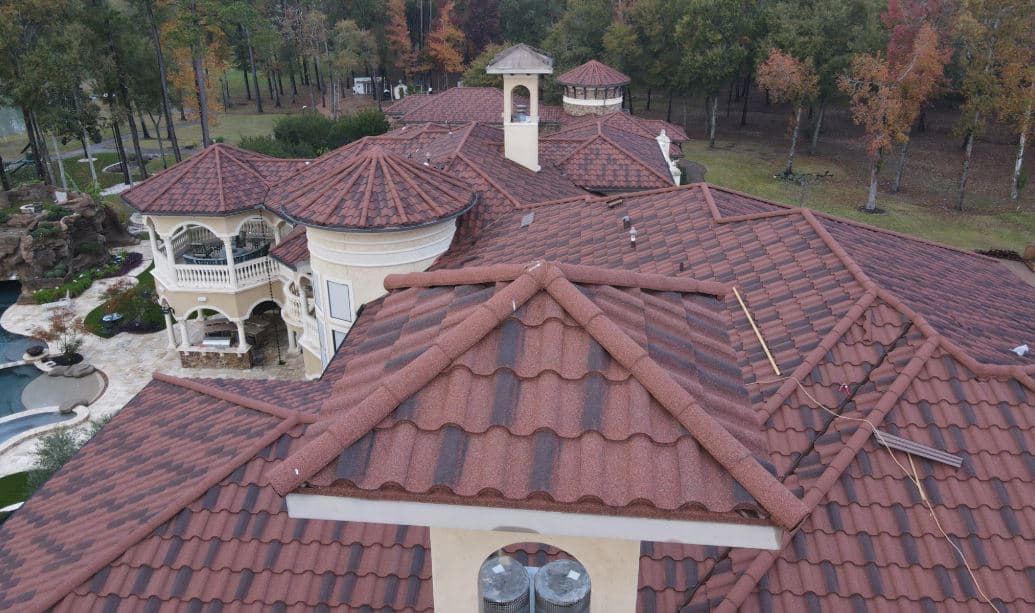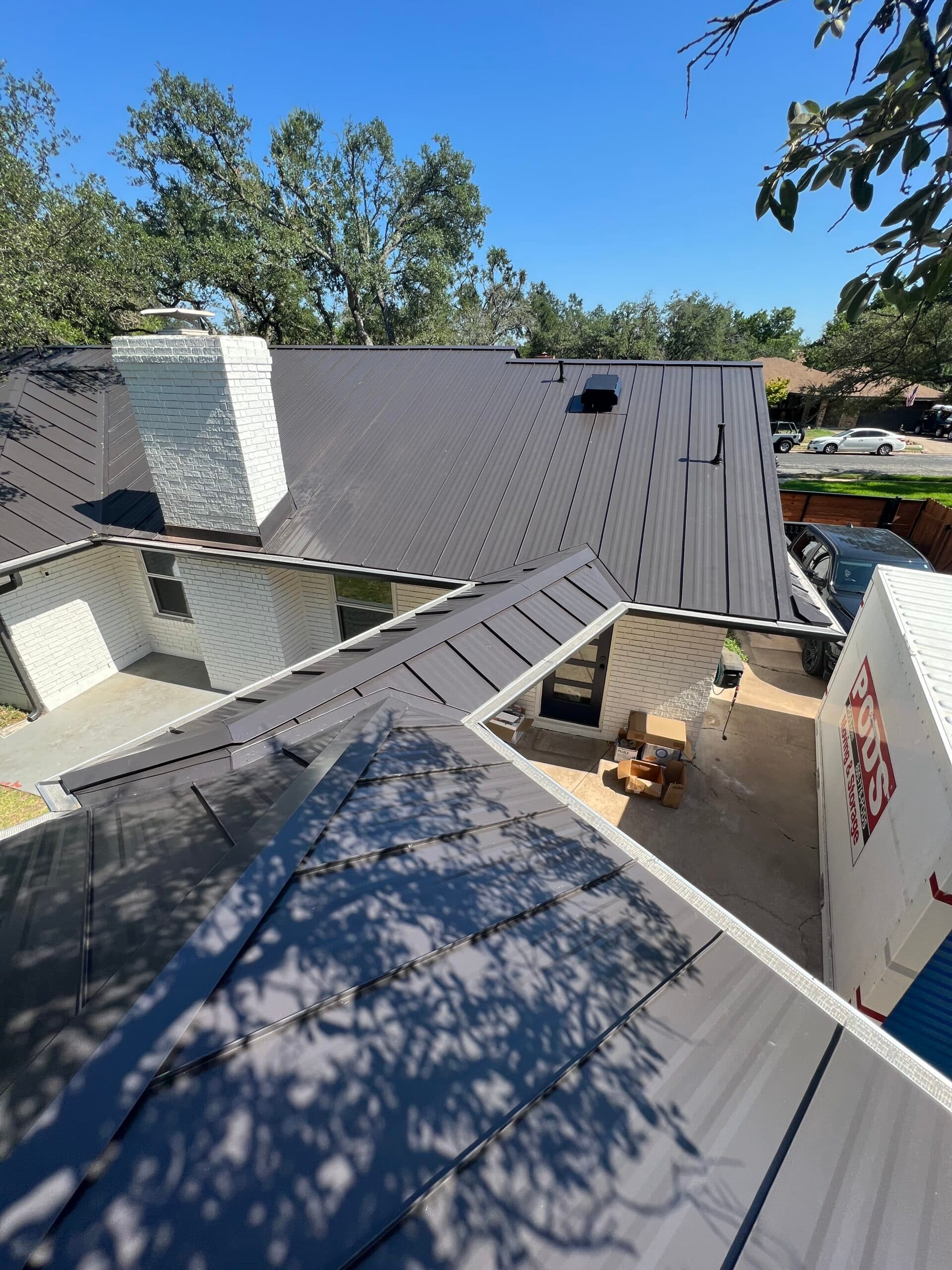
Short answer: Standing seam is the metal roof to choose in Taylor, TX if you want the longest-lasting roof with the fewest places to leak. It also suits you if you like the clean look of vertical metal panels. Expect roughly $14–$26 per square foot installed, or about $28,000–$52,000 for a 2,000 sq ft home. Older homes near downtown Taylor often need a new solid deck over their original board sheathing before panels can go on, so get that priced in writing. If you want metal that looks like shingles or tile, that's a different product, stone-coated steel. It's covered in our stone-coated steel guide for Taylor.
This guide is only about standing seam: how it works, what it costs on a Taylor home, how it handles the hail that keeps hitting eastern Williamson County, and what to look for in a bid.
Is Standing Seam the Right Metal Roof for Your Taylor Home?
"Metal roof" covers three very different products. Here's how they sort out for a Taylor homeowner:
| Standing Seam | Stone-Coated Steel | Exposed-Fastener (R-Panel / Corrugated) | |
|---|---|---|---|
| Looks like | Vertical metal panels with raised seams | Shingles, shake, or tile | Ribbed barn or shop metal |
| Fasteners | Hidden under the seams, on clips | Fastened to battens, covered by the next course | Screws through the face of every panel |
| Main strength | Fewest leak points, longest service life | Traditional look, Class 4 options | Low cost |
| Best fit in Taylor | Craftsman, farmhouse, modern, and many older downtown homes | Ranch and traditional homes, strict HOAs | Barns, shops, outbuildings, not homes |
Choose standing seam when you care most about long-term performance and you're happy with the look. Choose stone-coated steel when the roof needs to blend in with shingle roofs around it. Our standing seam vs. stone-coated steel comparison goes deeper on that decision.
Skip exposed-fastener metal on a house. Every screw is sealed by a rubber washer, and those washers break down in Central Texas sun and heat. You get a roof that needs re-screwing and leak-chasing long before the steel itself wears out. It's a fine choice for a barn. It's the wrong choice for the roof over your kitchen.
How Standing Seam Works, and Why the Details Matter in Taylor's Heat
A standing seam roof is made of long steel panels that run from the ridge down to the eave in one piece. Neighboring panels lock together at a raised seam, and the panels are held down by clips hidden under those seams. No screws go through the part of the panel that sheds water.
A few details decide whether a standing seam roof lasts 50 years or starts giving trouble in 10:
Floating clips vs. fixed clips. Steel expands on a hot Taylor afternoon and shrinks again overnight. On a long panel, that movement adds up. Floating clips let each panel slide slightly as it expands. Fixed clips pin it in place, which can cause waviness in the flat part of the panel ("oil canning") and stress around the fasteners over time. On most residential runs, ask for floating clips.
Snap-lock vs. mechanically seamed. Snap-lock panels click together by hand and suit most home roofs at normal pitches. Mechanically seamed panels are rolled shut with a seaming tool after installation. That makes a tighter joint that holds better on low slopes and in high-wind exposure. Mechanical seam costs more. Ask which one your bid includes and why.
Gauge. Lower numbers mean thicker steel. 24-gauge is thicker and stiffer than 26-gauge and holds up better against hail dents. Make sure the gauge is written on the bid.
Finish. Most residential panels are Galvalume steel, either left bare (a natural silver finish) or painted with a PVDF coating such as Kynar 500. PVDF finishes resist fading and chalking far better than cheaper polyester paints, which matters a lot under Texas UV.
Underlayment. Metal roofs run hotter underneath than shingles, so the underlayment beneath the panels should be a high-temperature product made for metal roofing, not the standard shingle underlayment.
What Does a Standing Seam Roof Cost in Taylor, TX?
Standing seam in Central Texas generally runs $14–$26 per square foot installed. That price includes tear-off, deck inspection, underlayment, panels, trim, flashing, and cleanup. Using the ranges from our Texas standing seam cost guide:
| Home Size | Typical Installed Range |
|---|---|
| 1,500 sq ft | $21,000–$39,000 |
| 2,000 sq ft | $28,000–$52,000 |
| 2,500 sq ft | $35,000–$65,000 |
| 3,000 sq ft | $42,000–$78,000 |
That's a wide range, and on Taylor homes a handful of things push a job toward the low or high end.
What pushes a Taylor standing seam job toward the high end
- Board sheathing. Many Taylor homes built before about 1970 have roof decks made of spaced 1×6 or 1×8 boards instead of plywood or OSB. Standing seam clips need a solid, continuous deck to fasten into, so these homes usually need new sheathing laid over the boards (or the boards replaced) before metal goes on. It's a real extra cost and one of the biggest differences between bids. Make sure it's a separate line item, not a surprise change order.
- Steep pitch. Older two-story homes often have steep roofs that need extra safety setup and slower installation.
- Chimneys and penetrations. Every vent, pipe, skylight, and chimney needs custom-bent metal flashing. An older home with a brick chimney and several vents costs more than a newer home with two plumbing vents.
- Complex rooflines. Dormers, valleys, and multiple roof planes mean more cutting, more trim, and more labor.
- Mechanical seam. Choosing mechanically seamed panels instead of snap-lock raises the price.
What keeps it toward the low end
- A simple gable or hip roof with few valleys
- Plywood or OSB decking in good condition (typical on newer Taylor subdivisions)
- Few roof penetrations and easy driveway access
- Snap-lock panels on a normal-pitch roof
For a number specific to your roof, our instant roof estimate tool lets you trace your roof on a map and see pricing for our standing seam package.
Will Hail Dent a Standing Seam Roof?
Hail is the main reason Taylor homeowners look at metal. Taylor took significant hail in 2016, 2021, and again in May 2024 (our guide to repeat hail claims in Taylor covers those events). So it's worth being precise about what metal does and doesn't do in a hailstorm.
What "Class 4" means. Impact ratings come from the UL 2218 test, where steel balls are dropped onto the roofing product. Class 4, the top rating, means the product took a 2-inch steel ball dropped from 20 feet without cracking or breaking through. Many standing seam panels carry a Class 4 rating, but it depends on the specific panel and gauge. Ask for the rating on the exact product being quoted.
What Class 4 does not mean. Class 4 is about the roof continuing to keep water out. It is not a promise that the roof won't dent. Large hail can leave dents in standing seam, especially thinner-gauge panels. Those dents are usually cosmetic, and the roof keeps working. For most Taylor homeowners, a dented-but-watertight roof is a much better outcome than a shingle roof that needs full replacement after every major storm.
Check your policy for a cosmetic damage exclusion before you buy. Many Texas homeowner policies now exclude cosmetic damage to metal roofs, meaning dents that don't cause leaks. If your policy has that exclusion, the insurer won't pay to replace a dented but functional metal roof. Know that going in, and ask your agent whether the exclusion changes your premium.
Insurance discounts. Most major Texas home insurers offer a premium discount for roofs rated UL 2218 Class 4. The amount varies widely by carrier and policy. Ask your agent for the actual number before you decide based on it. Our Class 4 insurance discount guide walks through how to request it.
What Do Older Taylor Homes Need Before Standing Seam Goes On?
Taylor's housing ranges from early-1900s homes near downtown to brand-new subdivisions built since Samsung's semiconductor plant came to town. Standing seam works on both, but the prep is very different.
Older homes (roughly pre-1970)
- Deck first. Expect to add solid sheathing over the original board deck, as described above. The roofer should find this during the inspection. If a bid says "install over existing deck" on a board-sheathed house, ask how the clips will be fastened.
- Look. Standing seam has a long history on older Texas homes and buildings. On a Craftsman bungalow or farmhouse, it reads as traditional rather than industrial. A painted finish in a dark bronze, charcoal, or natural Galvalume usually suits these homes.
- Historic designation. If your home is a designated historic property, check with the City of Taylor before choosing a roofing material. Rules can apply to historic properties that don't apply to the house next door.
- Ventilation. Older attics often have little or no ventilation. A re-roof is the right time to fix that, because good airflow under the deck helps metal and the attic stay cooler.
Newer homes (post-2015 subdivisions)
- Decking is usually OSB in good condition, which keeps the job simpler and less expensive.
- HOA approval is the bigger question. Many newer Taylor subdivisions have deed restrictions or an architectural review committee. Get written approval for the panel profile and color before you sign a roofing contract.
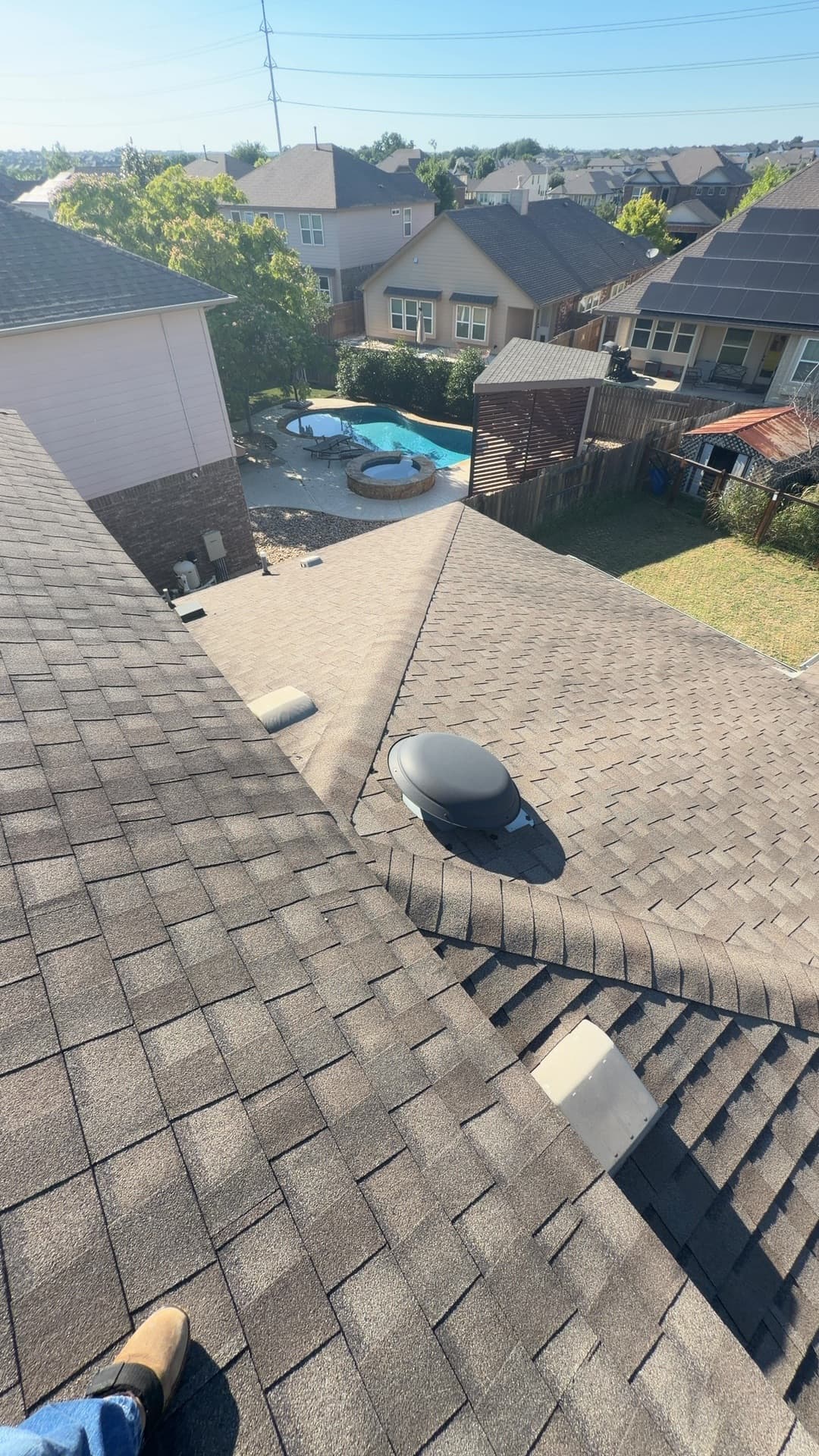
- Solar. If you're planning rooftop solar, standing seam is the best roof to put it on. Solar racking can clamp directly onto the raised seams, so the panels don't need holes drilled through the roof. Confirm the clamp system with both your solar installer and the panel manufacturer's warranty terms.
Heat, Noise, and Energy: What to Expect Living Under Standing Seam
Heat. Metal with a reflective finish sends back more sunlight than dark asphalt shingles, which can lower attic temperatures in a Taylor summer. Lighter colors and reflective PVDF finishes do the most. If energy savings matter to you, ask for the finish's solar reflectance rating (many are listed with the Cool Roof Rating Council). Lower cooling bills are a reasonable expectation. The exact amount depends on your attic, insulation, and HVAC.
Rain noise. The "metal roofs are loud" reputation comes mostly from barns, where there's nothing between the metal and the inside. On a house, the panels sit on underlayment and a solid deck, with an attic and insulation below. Most homeowners find rain noise similar to or only slightly louder than on shingles.
Ticking. You may hear occasional ticks as the roof heats up in the morning or cools off in the evening. That's normal expansion and contraction. Floating clips and correct installation keep it to a minimum.
How Long Does a Standing Seam Installation Take?
Most standing seam replacements on a Taylor home take 3–5 working days. Bigger or more complex roofs, and homes that need new decking, take longer. A typical sequence:
- Tear-off and deck inspection. Remove the old roof down to the deck, then repair or add sheathing where needed.
- Underlayment. Install high-temperature synthetic underlayment rated for metal, plus ice-and-water membrane in valleys and other critical areas.
- Trim and flashing. Install drip edge, eave and rake trim, and custom-bent flashing at walls, chimneys, and valleys.
- Panels. Set panels on concealed clips, working across the roof.
- Ridge, hips, and penetrations. Install ridge and hip trim, and seal every vent and pipe with metal-compatible boots.
- Cleanup and walkthrough. Clean the site, sweep for nails with a magnet, and do a final walkthrough with you.
How to Compare Standing Seam Bids in Taylor
Not every roofer who installs shingles installs standing seam well. When you compare bids, make sure each one clearly states:
- The panel manufacturer and profile, plus whether it's snap-lock or mechanically seamed
- The gauge (24 or 26) and the finish (bare Galvalume or PVDF-painted)
- The clip type: floating or fixed
- The underlayment: it should be a high-temperature product rated for metal
- The deck plan, especially on an older home with board sheathing, and what extra decking costs
- How flashing is done: custom-bent metal at chimneys, walls, and valleys, not sealant alone
- Both warranties in writing: the manufacturer's paint and panel warranty and the contractor's workmanship warranty. The manufacturer's warranty covers the metal. It won't cover a leak caused by bad flashing.
- Proof of insurance and manufacturer credentials. Texas has no state roofing license, so ask for a Certificate of Insurance and verify it with the insurance company directly.
For reference, McElroy Metal is one of the standing seam panel lines we install.
Standing Seam Roofs We've Installed
Three recent standing seam jobs show the points above on real homes:
- Mueller, Austin: Galvalume in Charcoal, replacing hail-damaged shingles. The homeowner was planning rooftop solar, so the roof was set up for clamp-on solar racking with no holes drilled through the panels.
- Teravista, Round Rock: Slate Gray panels on a hip roof with two dormers. We put together the HOA architectural review package, and the committee approved it before the job started.
- Bouldin Creek, South Austin: Natural, unpainted Galvalume on a modern farmhouse. We used 16-inch panels on floating clips so the steel can expand and contract without oil canning.
Frequently Asked Questions: Standing Seam Metal Roofing in Taylor TX
Q: How long does a standing seam metal roof last in Central Texas? A: A well-installed standing seam roof typically lasts 40 to 70 years, depending on the gauge, finish, and installation quality. That's two to three times the life of a typical asphalt shingle roof in Central Texas heat.
Q: How much does a standing seam roof cost in Taylor, TX? A: Standing seam in Central Texas generally runs $14 to $26 per square foot installed, or roughly $28,000 to $52,000 for a 2,000 square foot home. Older Taylor homes with board sheathing usually cost more because they need a new solid deck before the panels go on.
Q: Will hail damage a standing seam roof? A: Large hail can dent standing seam panels, especially thinner 26-gauge steel, but a Class 4 rated panel is designed to stay watertight after a 2-inch impact. Dents are usually cosmetic. Check whether your homeowner policy has a cosmetic damage exclusion for metal roofs before you buy.
Q: Can standing seam be installed over my existing shingles? A: Some manufacturers allow it, but we recommend a full tear-off. Removing the old roof lets the deck be inspected and repaired, and on older Taylor homes it's the only way to find and fix board sheathing that the clips can't fasten into properly.
Q: Does a metal roof attract lightning? A: No. Lightning strikes based on height and location, not roofing material. Metal is also non-combustible, so it won't feed a fire the way wood shakes can.
Q: Is a standing seam roof loud when it rains? A: Not on a house. The panels sit on underlayment and a solid deck with an attic and insulation below, so most homeowners find rain noise similar to or only slightly louder than on shingles. The loud-metal-roof reputation comes from barns with nothing between the metal and the inside.
Q: Can I put solar panels on a standing seam roof? A: Yes, and it's one of the best roofs for solar. Racking can clamp directly onto the raised seams, so the panels don't need holes drilled through the roof. Confirm the clamp system with your solar installer and the panel manufacturer's warranty terms.
Q: Should I choose standing seam or stone-coated steel for my Taylor home? A: Choose standing seam for the longest service life and the fewest leak points if you like the look of metal panels. Choose stone-coated steel if you want metal performance with the look of shingles or tile, or if your HOA won't approve standing seam. Our stone-coated steel guide for Taylor covers that option in detail.
Get a Standing Seam Estimate for Your Taylor Home
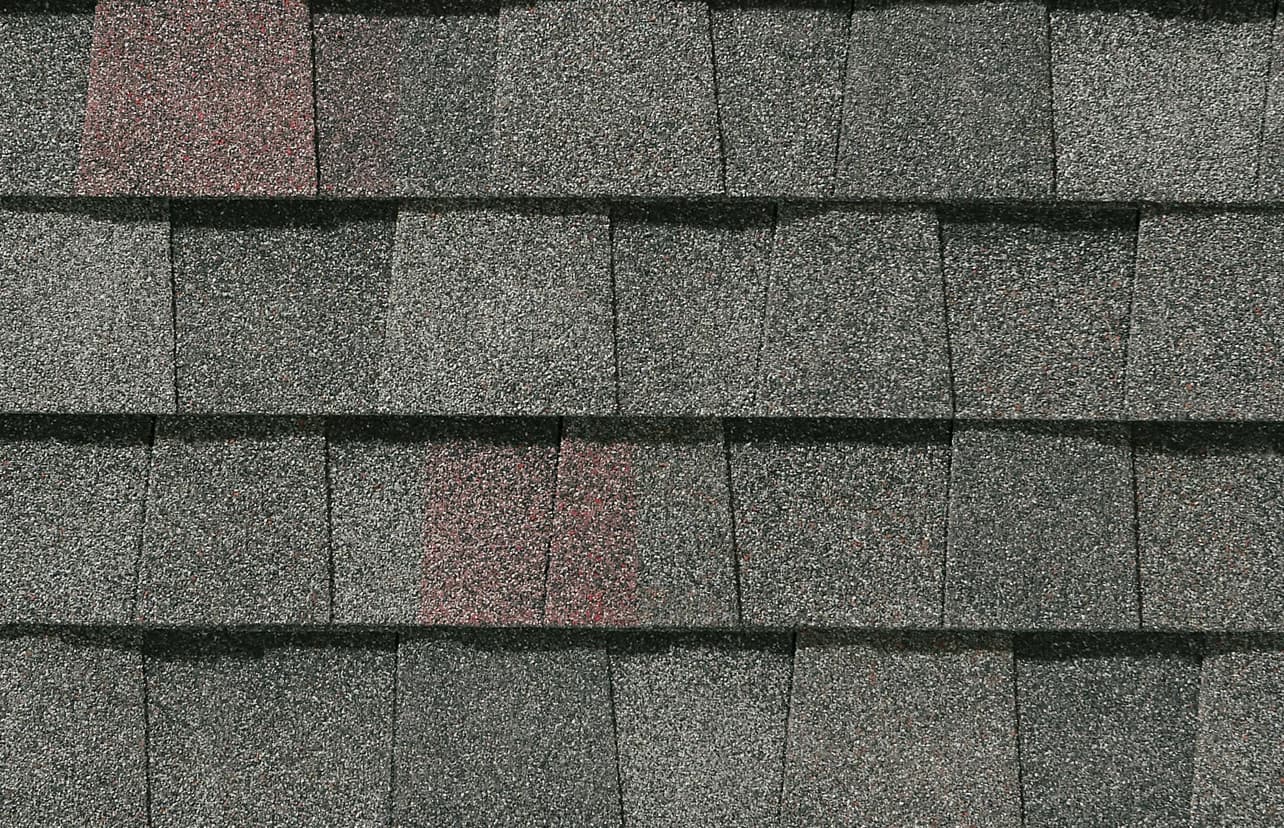
Ripple Roofing & Construction is based in Round Rock and serves Taylor and all of Williamson County. We're an SBA-certified Veteran-Owned Small Business and a CertainTeed ShingleMaster Premier contractor for shingle roofs. For standing seam, we'll inspect your deck, flag board sheathing before it becomes a surprise, and give you a written bid that spells out the gauge, clip type, and underlayment.
Get an instant estimate, request a free inspection, or call (512) 763-5277. You can also see everything we do in Taylor and on our standing seam metal roofing page.